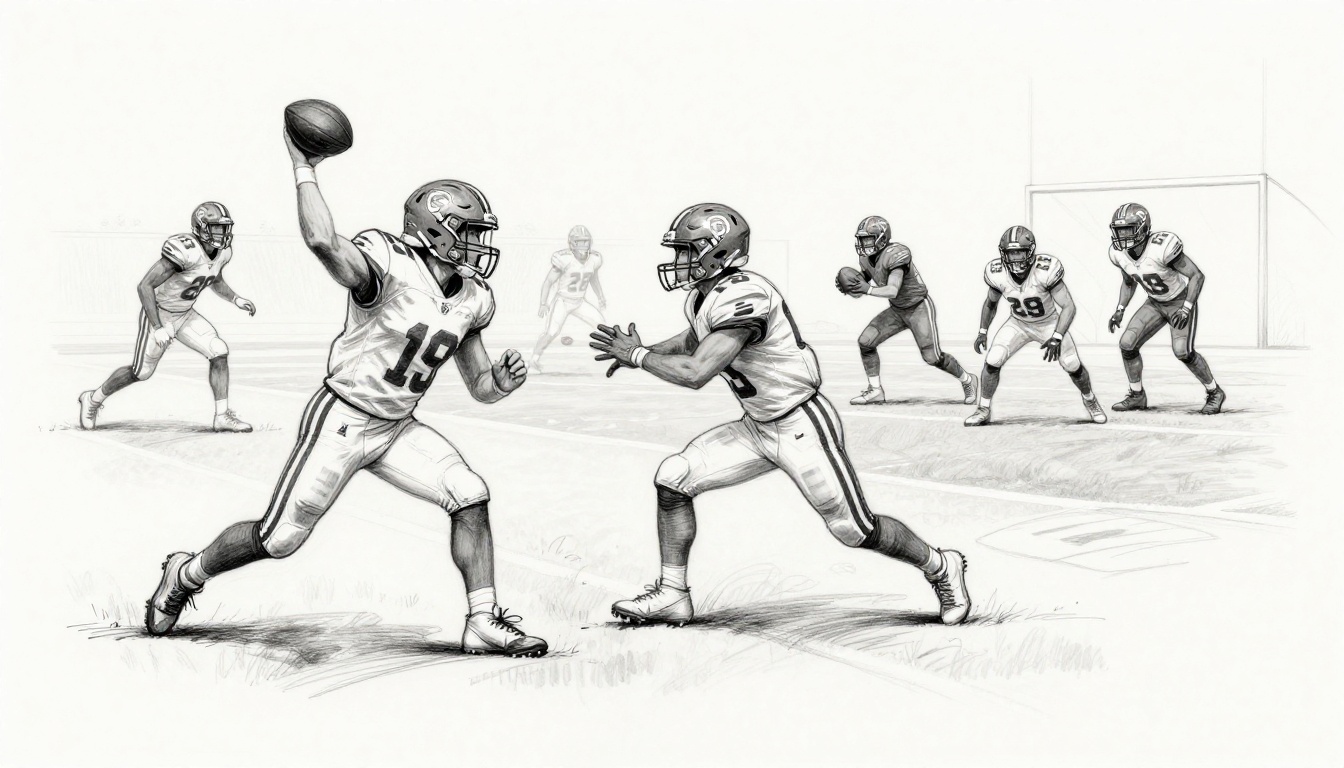
Picture this: You’re at a roaring stadium, jumping as your team punches in a touchdown. The quarterback slings the ball, a receiver hauls it in, and blockers clear the path. But which players do what to make those epic plays work?
American football splits into three main groups. Offense drives downfield to score. Defense fights back to stop them. Special teams handle kicks, punts, and returns. Each side fields 11 players at once, so roles matter a ton.
You’ve seen the chaos, yet positions confuse most beginners. In 2026 NFL trends, offenses go pass-heavy with speedy receivers in spread formations; fullbacks fade away for quicker schemes. Defenses counter with nickel corners who blitz, cover, and tackle.
Next, we dive into offense positions and how they team up to score.
Offense Breakdown: Meet the Players Who Drive Down the Field and Score
The offense aims to move the ball 10 yards in four plays, called a first down, or score a touchdown or field goal. They field 11 players each snap: one quarterback, center, two guards, two tackles, one running back, two wide receivers, and one tight end. Fullbacks have faded in 2026 because teams favor pass-heavy attacks. These guys work as a unit. Think of the quarterback as the driver steering the car; offensive linemen act like bumpers that shield him from crashes. Spot them by jersey numbers, often 1-59 or 90 and up.
Quarterback: The Field General Making Every Call
The quarterback starts every play. He takes the snap from center, then drops back to pass, hands off to a runner, or scrambles himself. Quick decisions matter most. He scans defenses pre-snap to spot blitzes or coverage gaps. Arm strength and pinpoint accuracy separate great ones from average.
Josh Allen of the Buffalo Bills shines here. In early 2026 games, he topped charts with smart reads and deep throws despite tough weapons. His mobility adds yards on runs. Yet, protection keeps him upright. Sacks end drives fast; a clean pocket lets him shine. Teams draft premium tackles just for this, as the NFL’s new Protector of the Year award highlights top blockers.
Coaches call audibles if defenses shift. Accuracy under pressure wins games. So, next time you watch, track how long he holds the ball.
Offensive Line: The Tough Guys Creating Space and Protection
Five big men anchor the offense up front. The center snaps the ball and calls blocks. Guards handle inside rushes with powerful pulls. Tackles seal edges; left tackle guards the blind side against fast edge rushers, earning top pay for a reason.
Picture them as a human shield wall. They fire out low, drive defenders back, and create lanes. Average size hits 6 feet 5 inches and 325 pounds in 2026. Guards tip lighter at 330 pounds; tackles push 340-plus with massive arms for punch-outs.
Strength shows in squats over 500 pounds and bench presses near 40 reps. They absorb hits yet explode off the line. Poor protection means hurried throws or sacks. Great lines, though, turn short gains into big runs. Watch their hand placement; it tells who wins battles.
Skill Positions: Running Backs, Receivers, and Tight Ends in Action
Running backs burst through holes for key yards. They catch screens too, dodging tackles with vision and burst. Wide receivers stretch fields with speed. They run crisp routes, like slants or posts, then explode after catches.
Tight ends blend roles. They block like linemen yet snag passes over linebackers. In 2026, hybrid types dominate, like Trey McBride with 119 catches last year. Teams stack two or three for mismatches.
Visualize it: receivers fan wide, running back aligns behind, tight end splits out. Quarterback picks his target. RBs read blocks like a pinball bumper. Receivers sell fakes to shake corners. TEs leap for contested balls. Together, they turn protection into points. Spot these speedsters in lower numbers, dancing after big plays.
Defense Demystified: The Heroes Who Sack Quarterbacks and Force Turnovers
Now shift your focus to defense. These players stop the offense you just learned about. They plug run lanes, rush the quarterback, and cover passes. A typical setup features a front four of linemen up front, linebackers right behind, and the secondary in the back. Teams run base 4-3 defenses with four linemen and three linebackers, or 3-4 schemes that drop to three linemen but add an extra linebacker for confusion, as this guide explains. In 2026, coaches love speedy edge rushers to counter pass-happy attacks. Spot them by jersey numbers in the 50s-90s. Teamwork turns chaos into stops; one weak link lets offenses roll.
Defensive Line: Nose Tackles, Ends, and the Rush Up Front
Defensive linemen anchor everything. Nose tackles, or 0-technique types, clog the middle against runs. They eat double-teams from guards and center, so running backs bounce outside. These guys average 6 feet 3 inches and 330 pounds, built like fire hydrants for leverage.
Then come the ends, or edge rushers. They loop around tackles for quarterback sacks. Speed and power let them bend the corner or bull inside. Will Anderson Jr. of the Houston Texans leads early 2026 with 3.5 sacks; Myles Garrett set a 2025 record at 23. Picture them as bulldozers plowing paths to the pocket. Teams pair massive noses with twitchy ends for balance.
Great ones dominate trenches. For example, Dexter Lawrence II ranks high among top defensive tackles for 2025. They fire low, shed blocks, and collapse pockets. Without them, linebackers face free runners. So watch how they set the edge; it dictates the whole play.
Linebackers: The Swiss Army Knives of the Defense
Linebackers flow everywhere. Inside or middle ones stack behind linemen to stuff runs and spy mobile quarterbacks. They read keys, fill gaps, and drop into flats for short passes. Outside linebackers align wider; they rush like ends, drop into coverage, or chase screens.
Blitzing amps their threat. Coaches send them on delayed rushes to fool protections. A linebacker loops free, sacks the QB, and ends drives. Brian Burns of the Giants notched 16.5 sacks in 2025 this way. Versatile stars switch roles mid-play, covering tight ends or tackling backs.
Their size hits 6 feet 2 inches and 240 pounds, with speed for sideline-to-sideline chases. Take K’Lavon Chaisson; he tied for second early 2026 with 3.0 sacks from linebacker spots. They call defenses too, pointing linemen pre-snap. In short, linebackers glue it all. One blitz changes momentum; watch them explode through gaps.
Cornerbacks and Safeties: Shutting Down the Air Game
The secondary locks the pass game. Cornerbacks press receivers at the line, jam routes, and mirror cuts. They backpedal deep or trail in man coverage, breaking on throws for picks. Speed rules here; top ones run 4.4-second 40s.
Safeties patrol behind. Strong safeties support runs near the line, blitz boxes, and cover slots. They tackle hard, averaging 200 pounds. Free safeties play deep centerfield, reading quarterbacks for over-the-top help. Free safeties snag more picks because they see the whole field.
Stats highlight impact. Elite corners tally 5-10 interceptions yearly; safeties add tackles for losses. Differences shine in zones: strong fills alleys, free prevents bombs, as this breakdown notes. They communicate non-stop. A timely pick flips field position. Next time, track how corners shadow stars; safeties clean up the rest.
Special Teams Secrets: Kicks, Punts, and Returns That Swing Games
Special teams step up when offense and defense take breaks. They handle kicks after touchdowns, extra points, and punts on fourth down. These moments flip field position and decide close games. A strong unit pins opponents deep or sparks returns for big gains. In 2026, teams like the Jets lead with record-setting kickers and returners, as their special teams stats show. You see less action here than skill spots, yet mistakes cost wins. Coaches drill these roles hard because one boot changes everything.
Kicker, Punter, and Snapper: Masters of the Long Kick
Kick the field goal. Nail the extra point. That’s the kicker’s job. He lines up 33 yards out for singles after touchdowns or longer hauls from 50 yards to win games. Pressure mounts with crowds roaring and clocks ticking. Nick Folk of the Jets set franchise marks in 2026 by drilling clutch ones.
Punter flips the field on fourth down. He catches the snap, drops the ball, and booms it 50 yards to bury foes inside their 10. Net average matters most; top teams hit 44 yards like the Colts. Winds, rain, and rushers test them.
Long snapper delivers laser snaps from seven yards back. He buries them low and fast so holder or punter grips easy. One bad snap dooms the play; blocks fly in seconds later. Holders catch and place for kickers too.
These three sync under duress. Rushes collapse pockets fast.
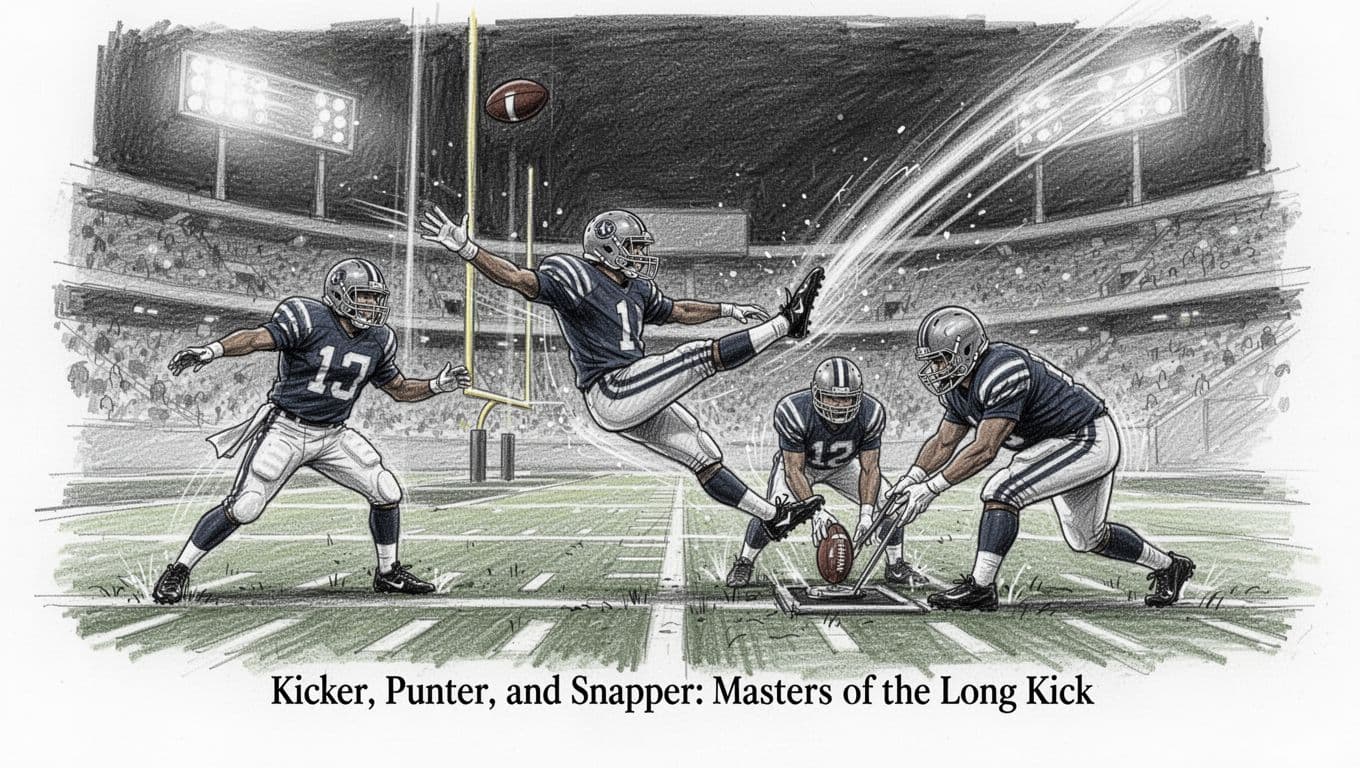
Coaches pick left-footed snappers for angles. Kickers train legs like sprinters. Punters study hangs to eat return time. Misses lead to turnovers; makes steal momentum. Watch how they breathe calm amid chaos.
Returners: Daredevils Who Turn Kicks Into Big Gains
Catch the punt or kickoff. Weave through tacklers. Returners chase yards or scores. They field spinning balls under fire, signal fair catches, or explode for house calls. KaVontae Turpin tops 2026 charts with 69 kickoff returns for Dallas, plus punt leader spots.
Speed rules. These guys often double as wide receivers or defensive backs, like Turpin or Chimere Dike of Tennessee. They spot blocks, cut sharp, and stiff-arm chasers. One 100-yard touchdown swings leads fast; Titans scored multiple for their top unit.
Gunners close quick. Returners read spins and lanes. Fair catches save drives, but bold calls spark crowds. Jets’ Isaiah Williams set records turning kicks into threats.
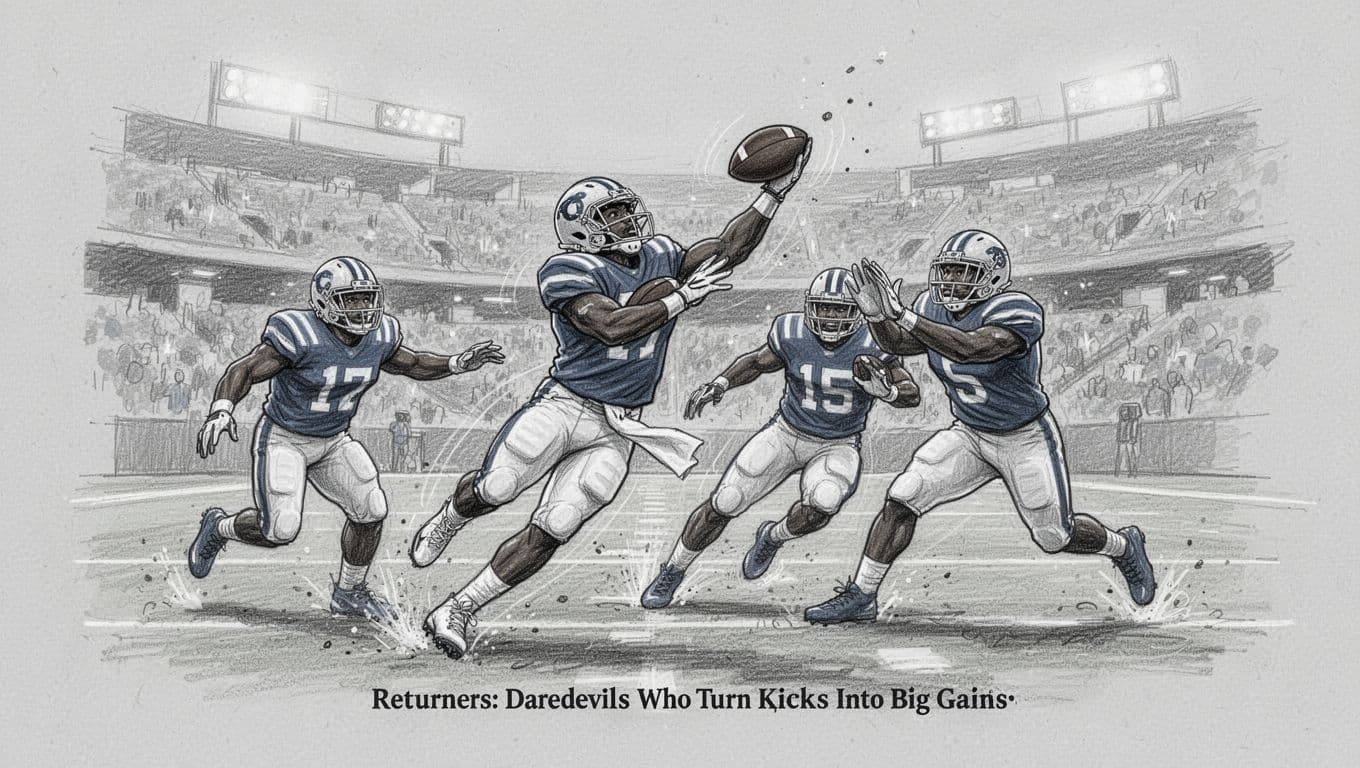
Teams hide aces here because injuries lurk. Yet big returns flip fields 80 yards. Next game, cheer these speedsters; they ignite comebacks.
Conclusion
You now grasp how offense, defense, and special teams each field 11 players to clash on every snap. Offense drives for scores. Defense stops them cold. Special teams flips the field with kicks and returns. Teams stick to 11 players per side because that rule keeps games balanced and fair across high school, college, and NFL levels.
College and pro football share the same positions. However, NFL squads boast bigger, faster athletes and more specialists. College players often double up roles, while pros mix groupings like 11 personnel for pass-run tricks.
Armed with this, watch your next 2026 game and spot every role in action. Quiz friends on who’s who.
What’s your favorite position? Drop it in the comments below. Subscribe for more tips to crush football chats.