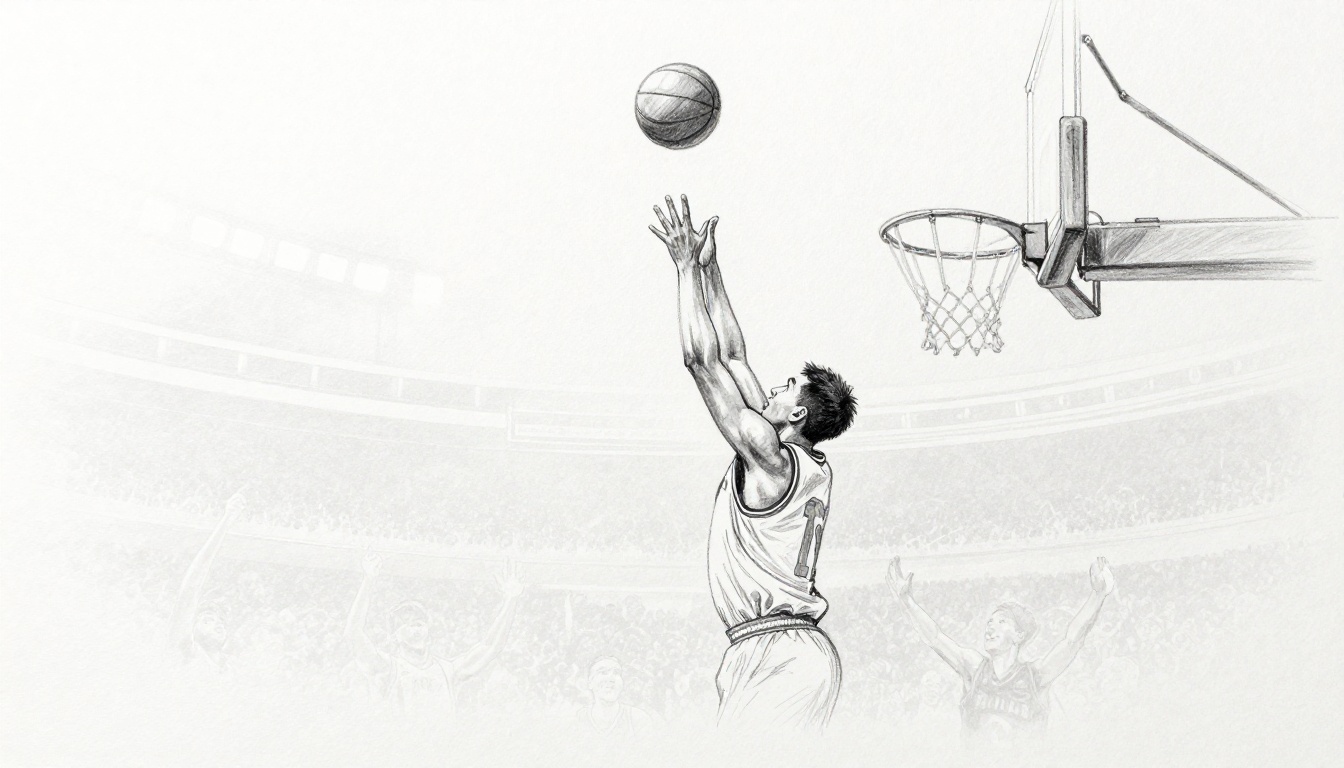
Picture this. The clock ticks down in the 2025 NBA Finals. A player drains a buzzer-beating three-pointer from the logo. The arena erupts. Fans go wild because that shot counts for three points, not two. Moments like these define basketball.
You watch games and wonder how the scoreboard ticks up so fast. Points come from field goals, free throws, and fouls that lead to extra shots. Field goals score two or three points during live play. Free throws add one each from the foul line. Fouls sometimes give direct points too.
This guide breaks it all down. You’ll learn the basics of shots, when free throws happen, and how rules differ by league. By the end, you’ll master how points are counted in basketball games. New fans will feel like pros. Let’s jump in.
Field Goals: Scoring with Shots During Play
Field goals form the heart of basketball scoring. Any basket made while the ball stays live counts as a field goal. Players score most points this way. A shot inside the three-point arc gives two points. Anything from behind it scores three.
Think of a quick layup under the hoop. That nets two points. Or picture a player like Stephen Curry launching from deep. That earns three. Teams build leads through these shots. Coaches stress shooting practice because field goals drive wins.
The arc marks the key line. It curves around the basket. Feet must clear it fully for three points. This rule keeps games fair. Shooters test their range constantly.
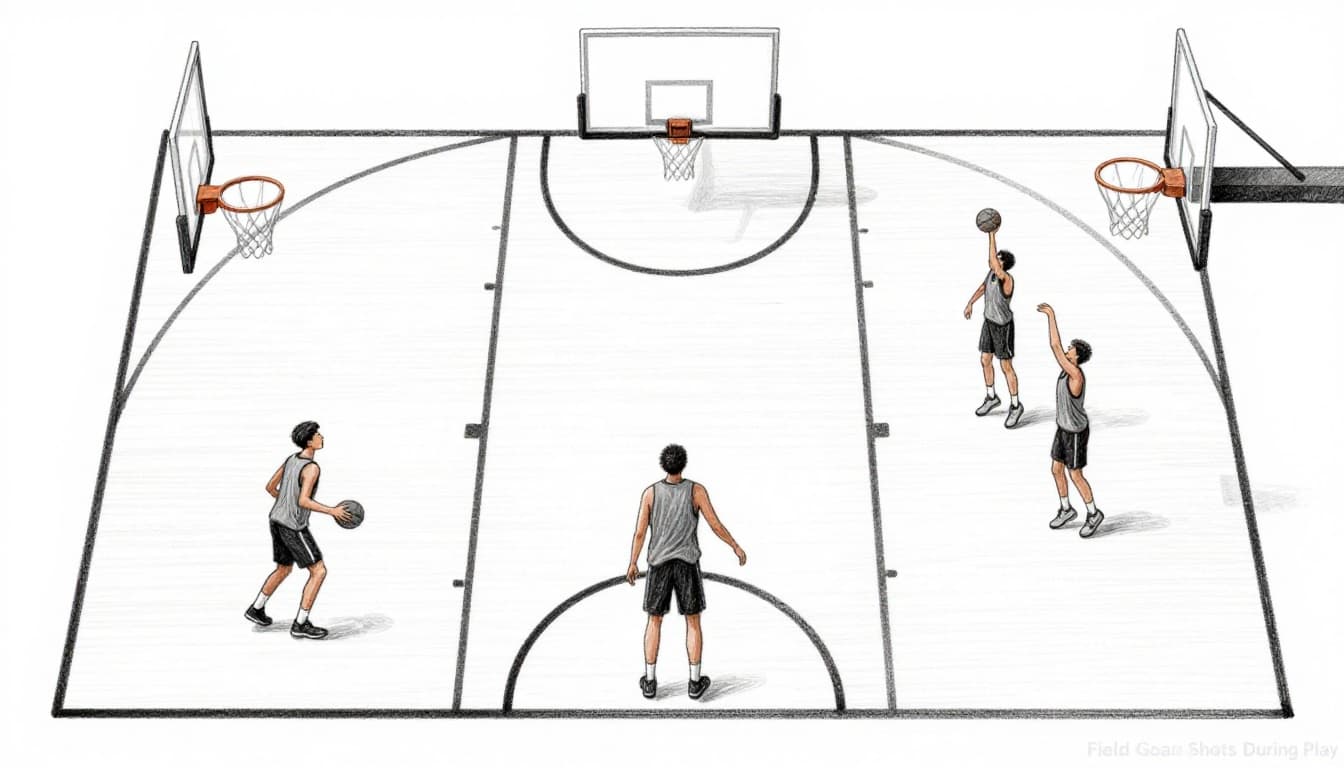
Distance matters too. NBA arcs stretch farther at the top, around 23.75 feet. College and international lines sit shorter. This setup boosts three-point tries in those games. For full details on NBA scoring rules for field goals, check the official guide.
What Counts as a 2-Point Basket vs a 3-Point Bomb?
Rules stay simple here. Any shot inside the arc scores two points. Dunks, jumpers, layups, all count the same. The ball must go through the hoop cleanly.
Three-pointers demand precision. The shooter needs both feet behind the arc when releasing. A toe on the line drops it to two points. Refs watch feet closely. In one famous play, a star’s heel touched, costing three points.
Examples help. LeBron James slams home a dunk for two. Klay Thompson steps back for three. These shots excite crowds most. Players train to beat the arc consistently.
Why Three-Point Lines Aren’t the Same Everywhere
Arcs vary by league. NBA uses 23.75 feet at the top, shorter in corners. WNBA matches at 22.15 feet flat. NCAA and FIBA stick to 22.15 feet too. Shorter lines mean easier threes.
Strategy shifts as a result. College teams bomb more from distance. NBA demands elite range. Fun fact: the longer NBA line weeds out average shooters. See a full comparison of three-point distances across leagues for visuals.
These differences add flavor to games. Watch closely next time.
Free Throws: Reliable 1 Points from the Foul Line
Free throws offer steady points. Each successful shot from the line counts one point. No defenders interfere. Players get these shots after fouls.
Fouls during a shot trigger them. A two-point try fouled gives two free throws. Three-point fouls award three. It’s like a free gift basket. Clutch players shine here.
Bonus rules kick in later. Teams hit a foul limit, then every common foul sends opponents to the line. NBA tracks five team fouls per quarter. After that, two shots per foul.
Imagine a tight game. A star gets hacked on a drive. He makes both free throws to tie it. Tension builds. All leagues value free throws at one point each. For NBA specifics, review official free throw penalties.
Common Situations That Earn Free Throw Trips
Several plays lead to the line. First, fouls on two-point shots give two free throws. Miss the shot, still get two. Make it, add an “and-1” for one more after.
Three-point fouls award three shots. Rare, but huge. Bonus fouls add two shots plus possession sometimes. In the fourth quarter, these decide games.
Pros like Giannis Antetokounmpo draw contact often. They convert at high rates. Practice builds that touch.
Fouls That Directly Add Points to the Scoreboard
Fouls rarely score without shots. Most lead to free throws. But technical and flagrant fouls change that. They punish bad acts directly.
Personal fouls during play send foes to the line. Steals or rebounds don’t add points alone. They set up plays that do. Refs call fouls to keep games clean.
Technical fouls target behavior. Flagrants hit dangerous contact. Both give free throws. Opponents gain from mistakes. Check NBA foul penalty details for more.
Technical Fouls: 1 Free Throw for Bad Behavior
Techs cover yelling at refs or delaying play. Coaches argue too much, they get called. Award: one free throw plus ball to opponents.
Two techs eject players in NBA and WNBA. NCAA counts them toward fouling out. Examples include hanging on the rim too long. It disrupts flow, so refs enforce strictly.
Flagrant Fouls: 2 Shots for Dangerous Plays
Flagrants split into levels. Type one means unnecessary contact. Two shots and ball to foes. Type two adds ejection for vicious plays.
Safety drives these calls. FIBA uses “unsportsmanlike” terms. All leagues prioritize player protection. A hard elbow might trigger two free throws.
How Scoring Rules Change by League
Rules tweak by level. NBA pros face different bonuses than college kids. This affects strategy. No major scoring changes hit as of March 2026. Point values stay standard across boards.
Bonus fouls vary most. NBA gives two shots after five team fouls per quarter. Tenth team foul adds possession too. WNBA uses four per quarter. NCAA men and women track seven, then ten per half. FIBA goes by quarters with four fouls.
Foul outs differ. NBA and WNBA allow six per player. NCAA limits to five. FIBA caps at four. Three-point lines shift as noted. Overtime always runs five minutes.
| League | Team Bonus Fouls | Player Foul Out | 3-Point Line (Top) |
|---|---|---|---|
| NBA | 5/quarter | 6 | 23.75 ft |
| WNBA | 4/quarter | 6 | 22.15 ft |
| NCAA | 7 then 10/half | 5 | 22.15 ft |
| FIBA | 4/quarter | 4 | 22.15 m |
This table shows quick diffs. Use it to follow any game. For NCAA bonus info, see the 2025-26 rules differences PDF.
NBA and WNBA: Pro League Nuances
Pros play tighter. NBA’s double bonus after ten fouls rewards defense. WNBA quarters stay shorter at ten minutes. Both foul out at six. Long arcs test shooters.
NCAA College vs FIBA International
College halves run 20 minutes. Bonuses hit at seven and ten fouls. Five fouls end a player’s night. FIBA quarters last ten minutes with four-foul bonuses. Games feel faster.
Spot these when switching channels.
Field goals score two inside or three outside the arc. Free throws add one reliably. Fouls trigger shots or direct points via techs and flagrants. League tweaks like bonuses and lines add variety.
Rules hold steady in 2026. Three-pointers reshaped the sport since 1979. Now teams live by them.
Next game, track the board smarter. Share your favorite scoring play in the comments. What moment sticks with you?