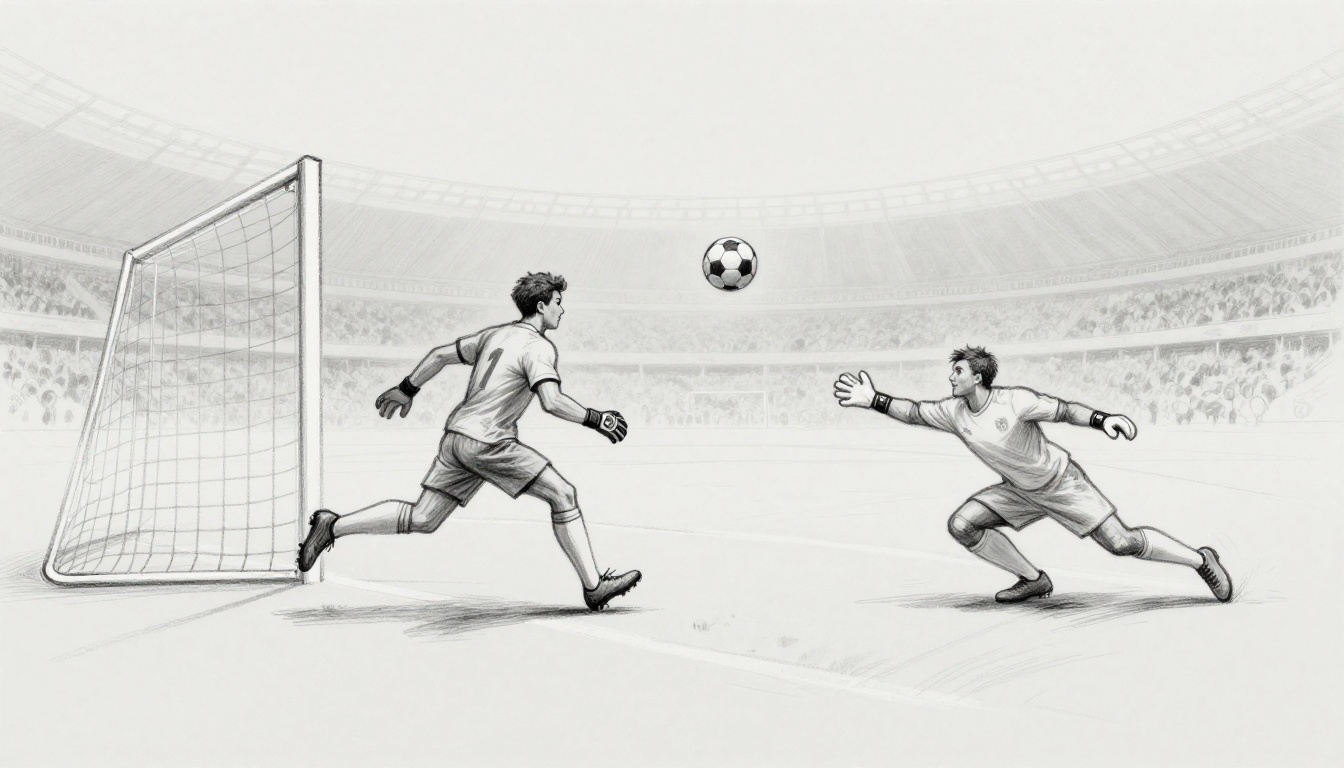
Imagine the roar of 80,000 fans in a World Cup final. The clock ticks down to seconds left. One player slots the ball past the keeper, and the stadium erupts. That last-minute goal captures soccer’s pure magic.
You’ve watched matches and cheered those moments. But how scoring works in football (soccer) has precise rules from FIFA’s Laws of the Game (2025/26 edition). It seems simple: kick the ball in. Yet details like offside, handball, and VAR checks decide if it counts.
In this post, you’ll see what makes a goal official, step by step. We’ll cover ways to score, key rules that stop goals, tech like semi-automated offside, and updates as of March 2026, such as the 8-second keeper hold rule. Beginners and casual fans, this breaks it down easy.
Ready to dive in?
What Counts as a Goal? The Official Definition
Ever wonder why some “goals” get chalked off in soccer? It boils down to strict soccer goal rules from FIFA. A goal counts when the whole ball fully crosses the goal line. That means between the goalposts and under the crossbar. No part can stay behind the line.
FIFA spells this out in Law 10 of the Laws of the Game (2025/26 edition). The attacking team earns one point. But only if no violations happen first, like offside or fouls. Attackers can’t throw, carry, or use hand or arm to propel it, even the keeper in their penalty area.
Think of it like a finish line in a race. The ball must sneak completely over, not just touch it. Rebounds off posts, crossbar, or net still count, as long as it fully crosses. Air or ground doesn’t matter. However, an outside agent, say a fan or animal, stops it? No goal.
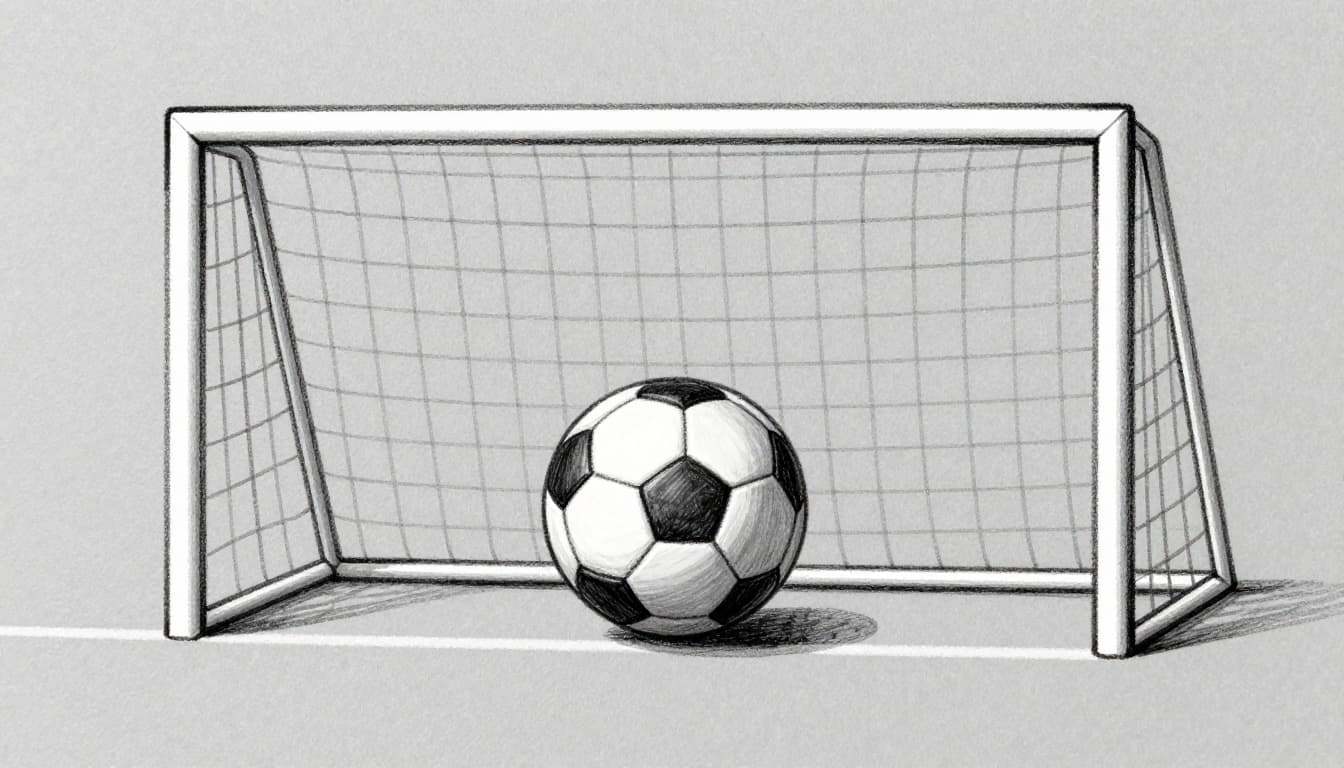
Myths persist, though. Many think a ball halfway over scores. Nope. Refs check the whole ball. That’s where goal-line technology steps in. It ends disputes on tight calls.
Here are key elements that make a goal official:
- Full crossing: Entire ball over the line.
- No handball: By attackers, including keeper.
- Valid path: No offside or foul before.
- Goal structure: Standard size, 8 yards wide by 2.44 meters high.
These rules keep games fair. Next, see how tech backs them up.
Goal-Line Technology: No More Disputes
Goal-line technology acts like a high-tech referee eye. Cameras around the stadium track the ball at high speed. Chips in the ball and goalposts help too. Together, they detect if the whole ball crosses the line. Accuracy hits 99.9 percent. Decisions come in under one second.
When it confirms, the referee’s watch vibrates. It shows “GOAL” or “NO GOAL.” Only the ref sees it. No more human error on the line.
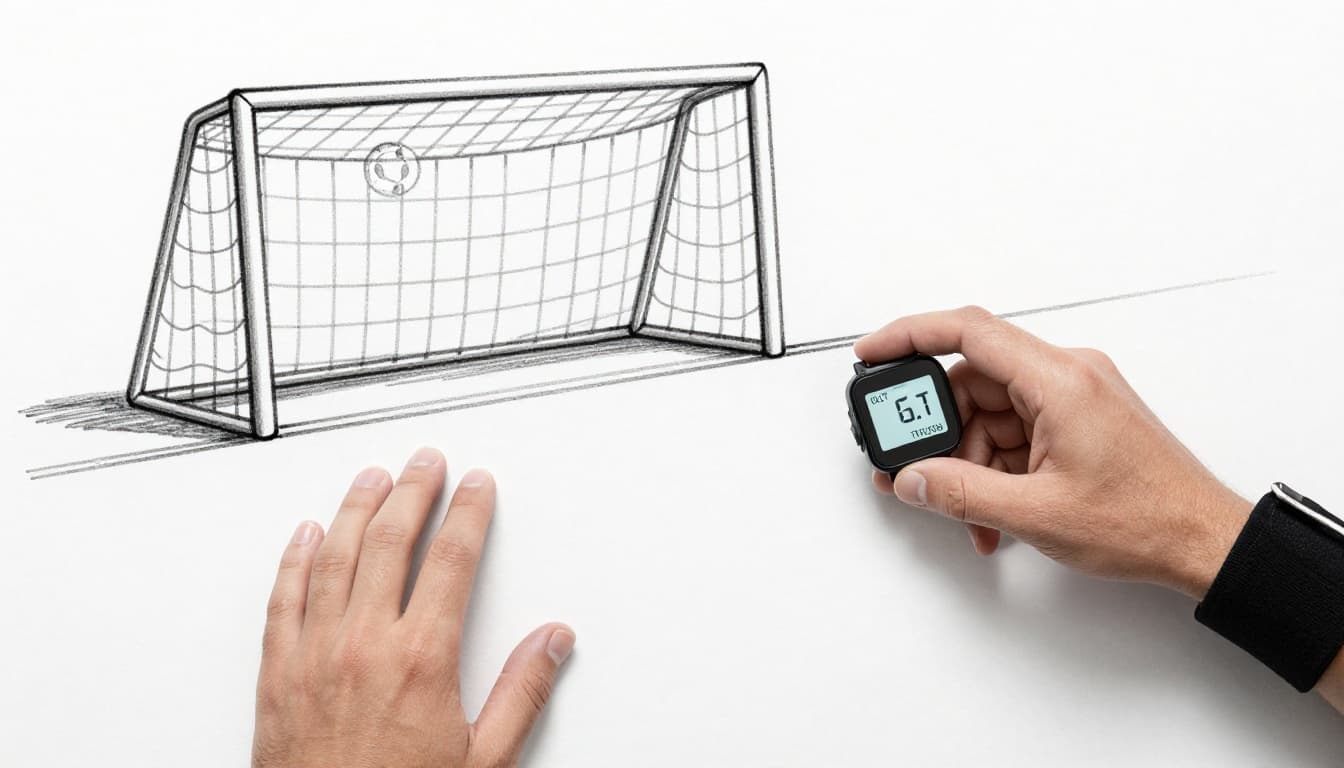
Pros use it in big leagues. English Premier League, Serie A, and UEFA Champions League all rely on systems like Hawk-Eye. FIFA certifies them with pre-match tests, including ball cannons for tough shots.
Take Frank Lampard’s shot in the 2010 World Cup against Germany. The ball bounced over the line, but refs missed it. England lost 4-1. That “ghost goal” pushed GLT into major tournaments starting 2014. Now, close calls vanish fast. Fans cheer without doubt.
Step by Step: From Shot to Official Score
Picture this. You’re on the pitch. The striker unleashes a shot. The ball rockets toward the net. That split-second wait before the roar builds tension. Then, it happens. But what turns that shot into an official score? Let’s walk through the soccer scoring process step by step. It keeps the game flowing smooth and fair.
Here’s how it unfolds in open play:
- Ball crosses the line. The whole ball passes over during active play. Goal-line tech confirms it fast if needed.
- Referee signals goal. The ref blows the whistle sharp. Arms point to the center. Play stops right there.
- Score updates. The board flips or lights up. Home and away tallies shift. Fans check their phones too.
- Opposing team restarts. They take the kick-off from center. This hands momentum back quick.
These steps lock in the point. No delays drag the excitement. As of the 2025/26 FIFA Laws, no big shifts hit this core flow. Restarts speed up overall, though. For example, keepers now hold just eight seconds. That cuts waste elsewhere.
Check IFAB’s Law 8 on restarts for the full procedure. It ties everything together.
Restarting the Game After a Goal
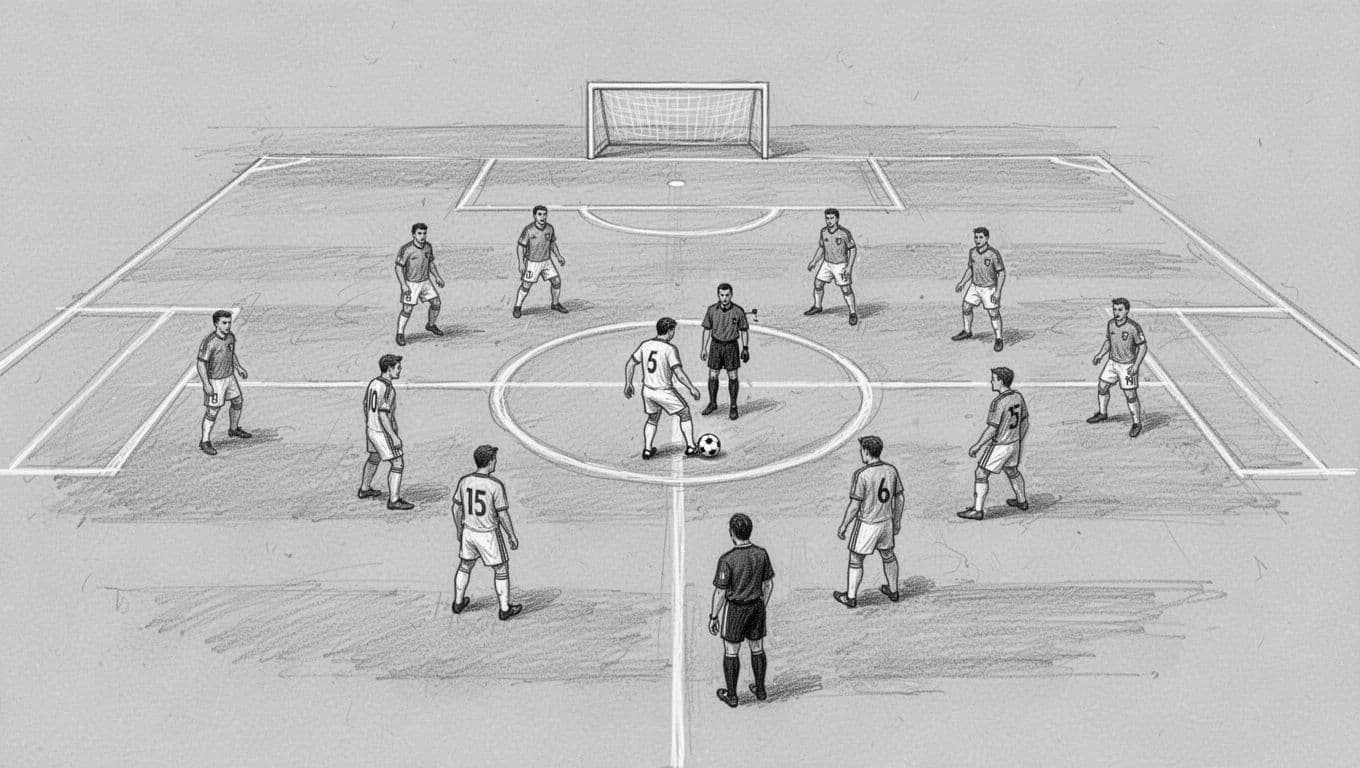
A goal scores. Joy surges. But play resumes fast from the center spot. The team that just got scored on takes the kick-off. All players stay in their own half until the ball moves. Opponents wait at least 9.15 meters away.
The kicker places the ball stationary right at center. They must send it forward. No backward passes or tricks. You can’t score direct from this kick-off. That rule stops quick goals and resets the action fair.
Ref stands close, whistle ready. Ball rolls. Teams surge upfield. It links the score to fresh chances. Think of it as a deep breath before the next wave.
This setup maintains balance. Both sides get equal shots after the thrill.
Ways to Score: Open Play, Set Pieces, Penalties, and Own Goals
Goals come from different paths in soccer. Most happen in open play, where players dribble, pass, and shoot during free-flowing action. Teams score 60 to 80 percent this way in the Premier League this season. Then set pieces kick in. Corners often lead to headers after defensive slips. Direct free kicks fly straight in; indirect ones need a teammate’s touch first.
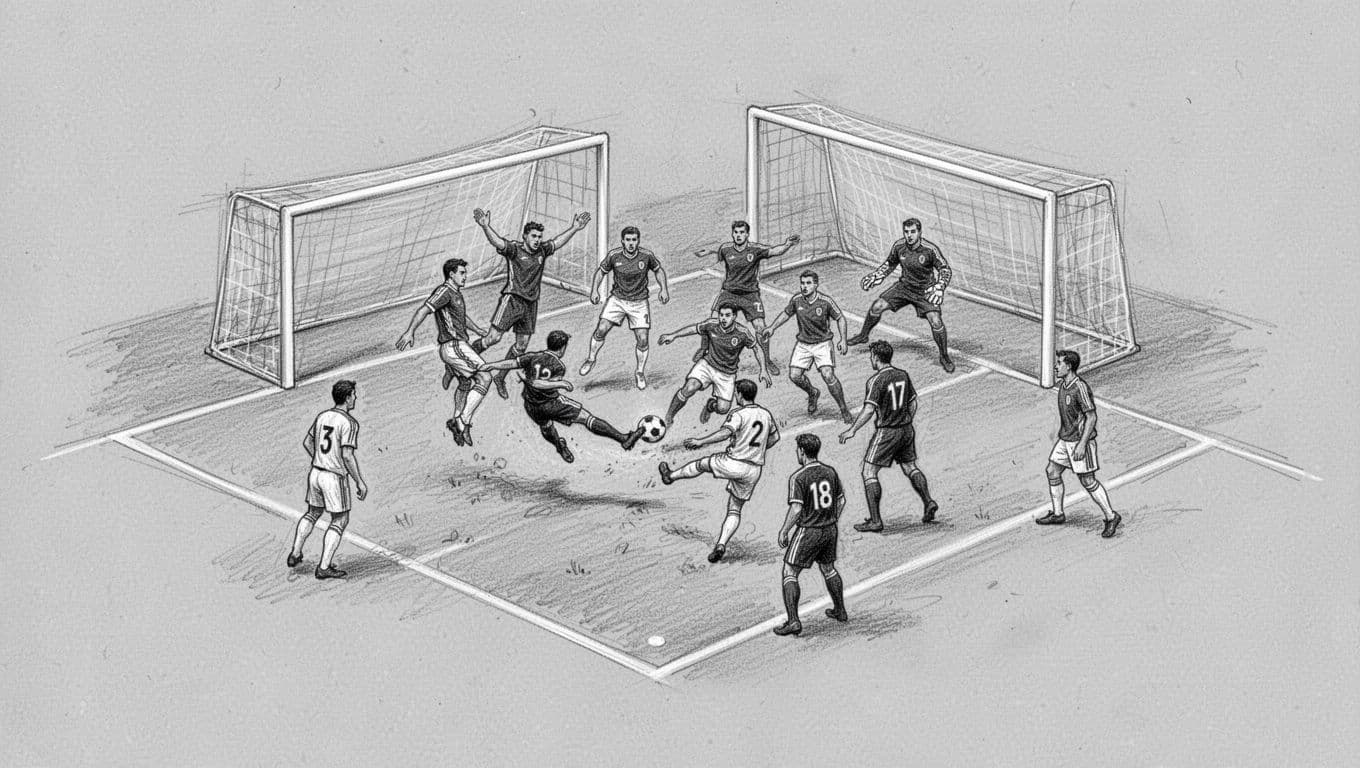
Set pieces account for 20 to 30 percent of goals, like Arsenal’s 30 percent haul. Know these ways to score in soccer, and you’ll spot patterns in every highlight reel. Penalties and own goals add the twists.
The High-Stakes Penalty Kick
Penalties pack drama. They happen for fouls inside the box. The kicker stands 11 meters from the line. Everyone else stays outside the area. The keeper roots on the goal line.
Here’s the step-by-step tension:
- Ball sits still at the spot.
- Kicker eyes the target, starts the run-up.
- Strikes with power or placement.
- Keeper dives left, right, or stays put.
If the ball goes in, it counts. But watch the rules. FIFA’s 2025/26 Laws say no double touch by the kicker until another player contacts it. An unintentional slip means retake if it scores; otherwise, defenders get an indirect free kick. See IFAB’s Law 10 for details.
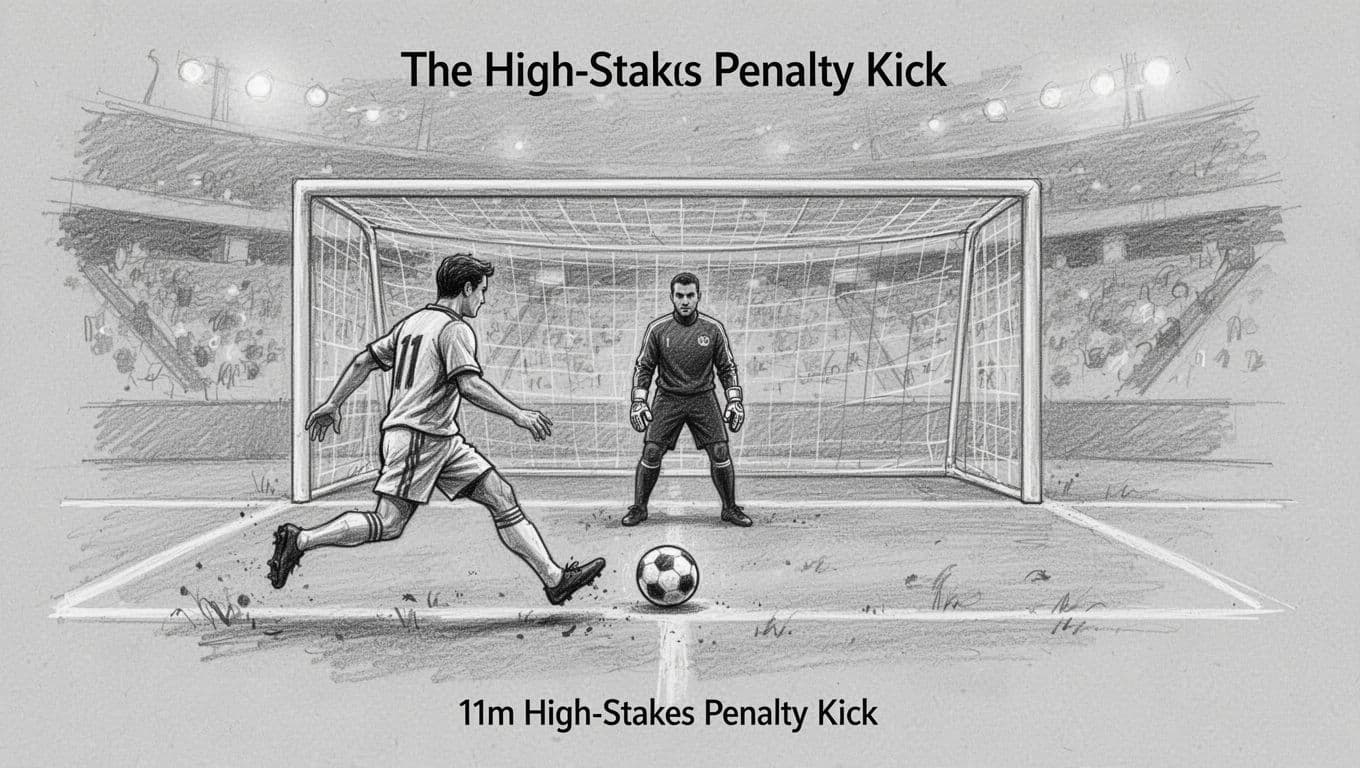
Pressure mounts. Remember Zidane’s Panenka chip in Euro 2004? Or Messi’s cool finish for Barcelona? Pens make up 5 to 15 percent of goals, yet they swing matches.
Own Goals: The Unwanted Tally
Own goals sting. A defender makes the last touch, sending the ball into their net. It counts for the attackers anyway. No take-backs.
They pop up in big games. Premier League teams see a few each season, like Arsenal’s four this year. Defenders’ nightmares happen on clearances gone wrong or deflections under pressure.
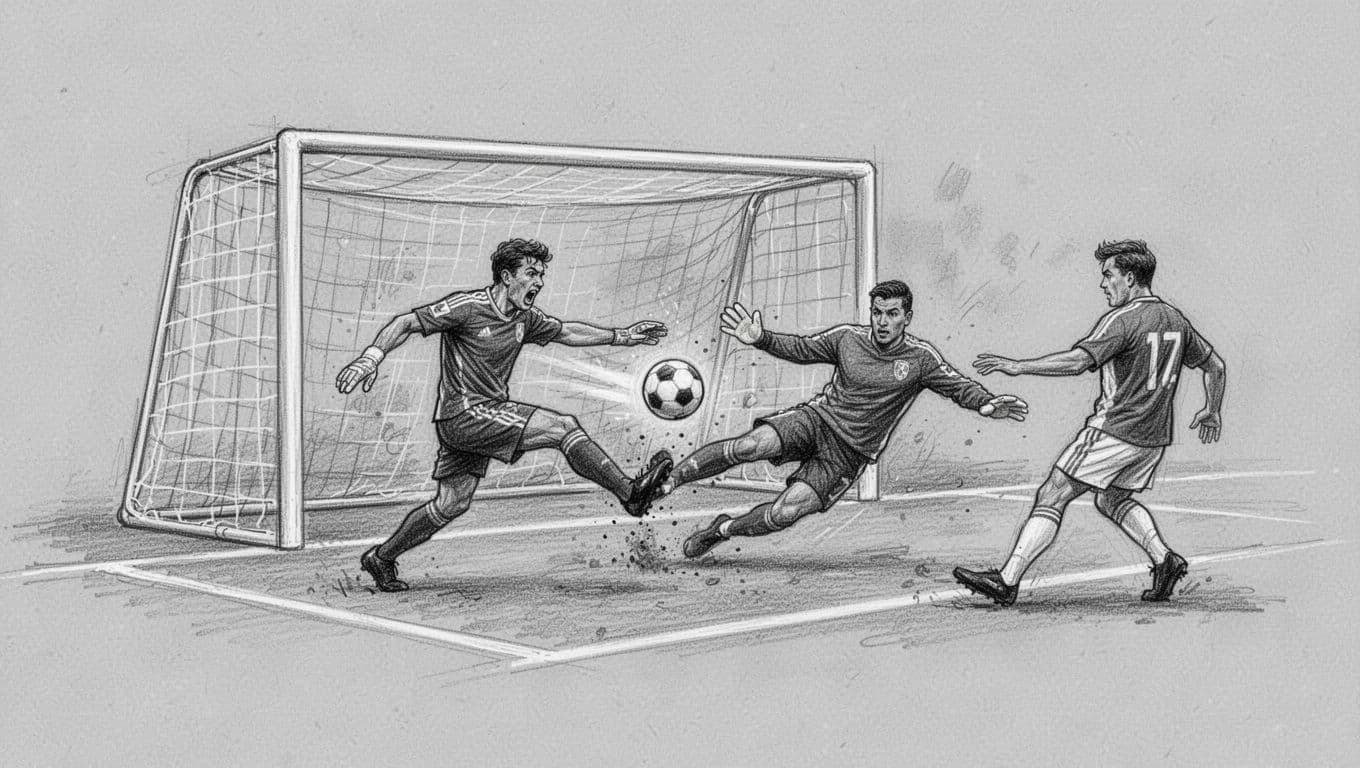
Picture a corner. The ball loops in. A panicked slide shanks it past the keeper. Fans groan; scoreboard flips. Yet these rare tallies, under 5 percent, add chaos. They keep everyone sharp.
Rules That Block Goals: Offside, Handball, and More
Goals don’t always count, even if the ball crosses the line. Rules like offside and handball block them to keep play fair. Attackers must follow these, or refs disallow the score. As a result, VAR checks them quick in top matches. In addition, the 2025/26 FIFA Laws tie everything to goal validation. Let’s break it down.
Offside happens when an attacker stands nearer to the goal line than both the ball and the second-last opponent at the pass moment. They can’t interfere, like touching the ball or blocking defenders. If they do, no goal. For example, a striker lurks ahead; the pass goes long. Ref flags it. See the offside rule in soccer explained for basics.
A new tweak helps. When the keeper throws from hands, offside starts at that last contact point. This clears up restarts. Handball kills goals too. Players can’t use hand or arm deliberately, or make their body unnaturally big. It hits the arm? Still a foul if it stops a clear shot. Direct handball goals don’t count; penalties follow in the box. Check IFAB’s handball details for examples.
These rules stop cheap scores. Defenders time their line perfectly. Attackers stay patient. Most importantly, they reward smart play.
Mastering the Offside Trap
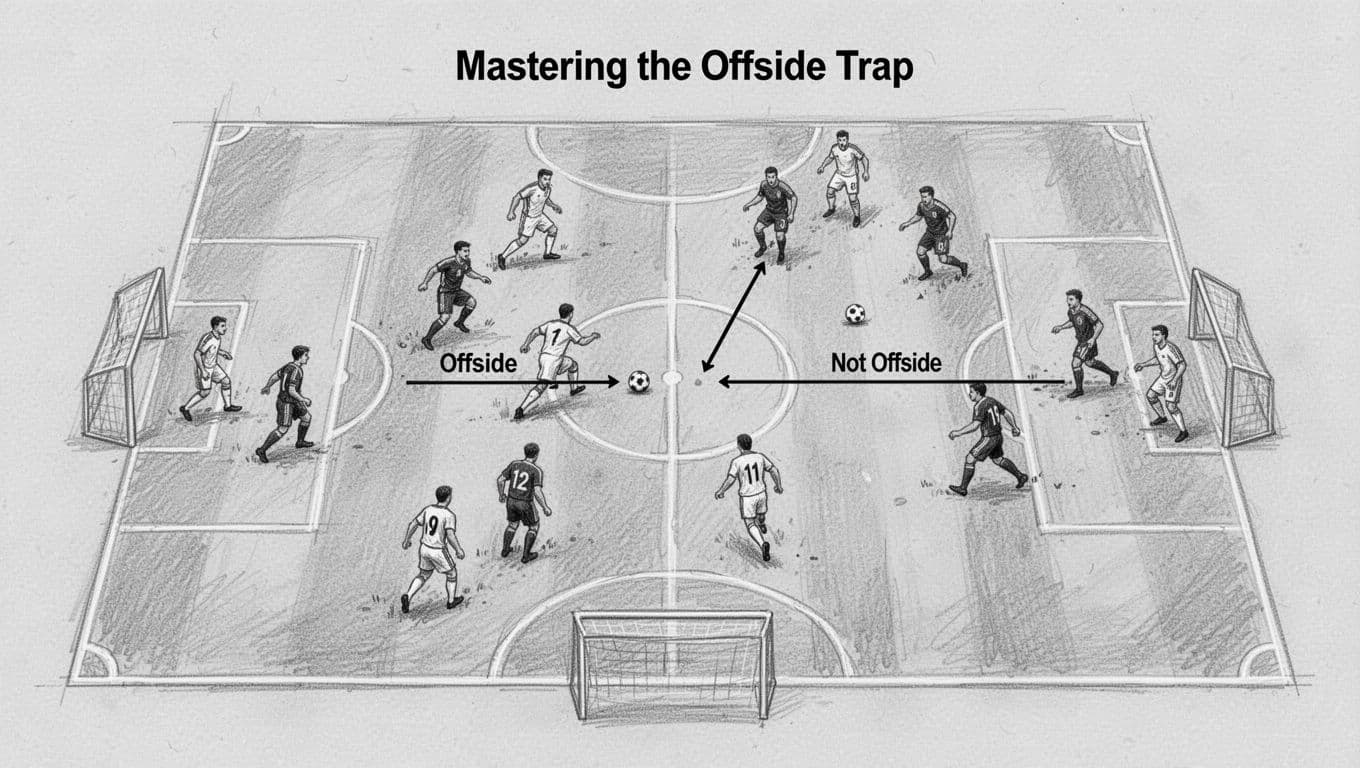
Defenders master the offside trap by stepping up together. They catch attackers ahead of the ball line. Picture a high line near midfield. The pass forward leaves strikers stranded. No goal.
It’s not offside if the attacker stays behind the ball when played. They can run on after. Here’s a simple top-down view to see it.
Semi-automated offside technology (SAOT) speeds checks. Cameras track players in 3D. AI draws lines fast for VAR. It shows exact positions in seconds. Premier League uses it now. Fans see replays clear. Therefore, disputes drop. See The FA’s 2025/26 law changes explained for trials.
Practice this. Watch Liverpool’s high line snare foes. It turns defense to attack quick.
VAR and Tech: Ensuring Every Goal is Fair
Tech like VAR in soccer goals keeps decisions spot on. It checks for clear errors in goals, penalties, and red cards. Referees get help from video feeds. As a result, fans see fair play. No more robbery from missed calls.
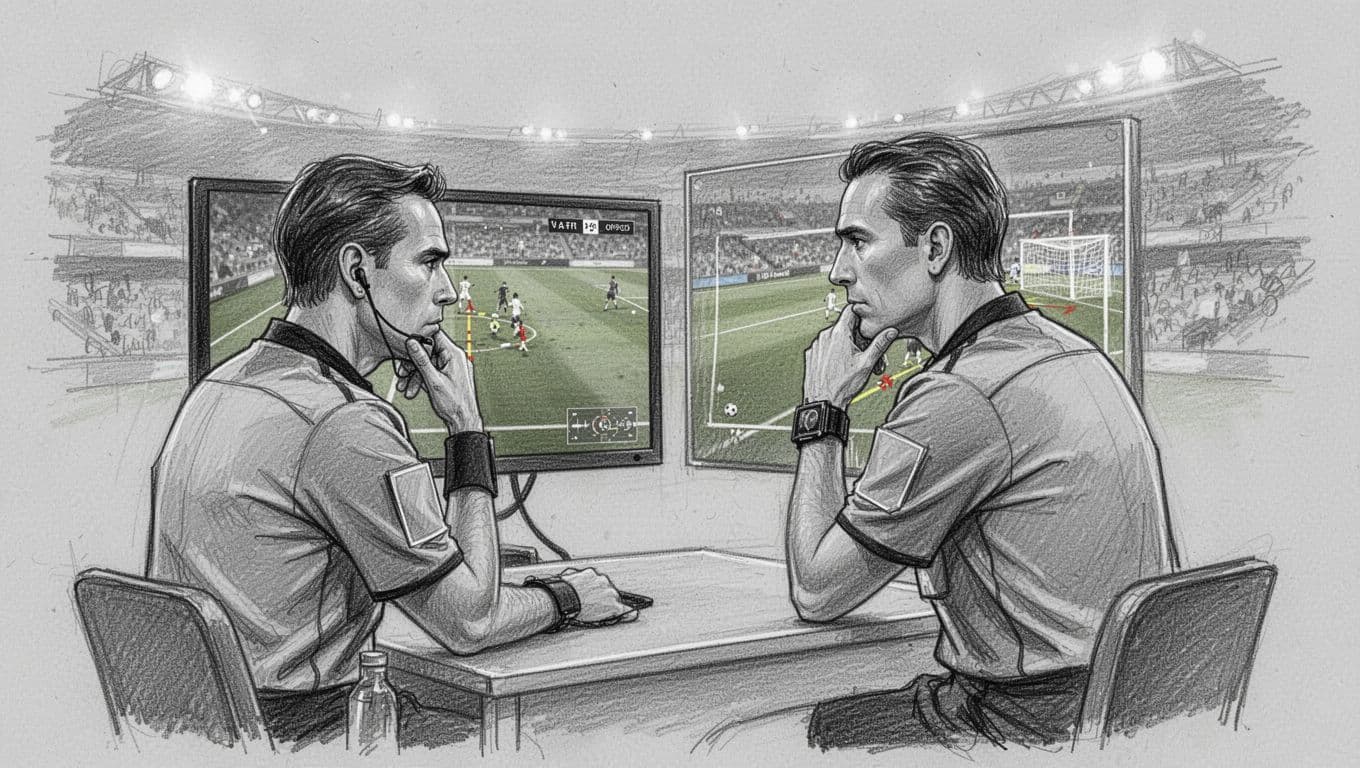
VAR stands in a studio near the pitch. They watch multiple angles. If a mistake looks obvious, they alert the ref. Then the ref decides on a review. This setup speeds things up. In addition, it builds trust.
The VAR Review Process for Goals
VAR follows strict steps for goal checks. First, the on-field ref awards or disallows a goal. Next, VAR scans for offside, handball, or fouls. They flag only clear errors. For example, if offside lines from SAOT show a violation, they buzz the ref.
The ref can check the pitchside monitor themselves. They review slow-motion replays. Then they stick with the call or change it. Play restarts quick after. Goal-line technology confirms the line cross first. These tools work together.
In the Premier League this 2025-26 season, accuracy holds at 86 percent. Errors rose a bit, however. MLS saw a bad red card call that suspended a ref until June.
Updates Coming in 2026/27 Seasons
Big changes hit from July 2026. VAR now checks wrong corners or goal kicks if clear mistakes happen. They cover second yellow cards too. Competitions opt in. See FIFA’s rule changes for the 2026 World Cup.
GLT and SAOT stay standard in top leagues. Premier League uses them daily. Tests proved them reliable. Therefore, goals feel certain.
These tweaks cut disputes. Fans focus on the action. Tech changes the game forever.
Conclusion
A goal scores when the whole ball crosses the line, following steps from shot to restart. Open play delivers most tallies, yet set pieces like Arsenal’s 17 this season tip title races. Rules such as offside and handball block unfair scores, while tech like VAR and goal-line systems lock in fairness.
These elements keep soccer pure and exciting. FIFA Laws update often, so check the latest for tweaks.
Watch your next match with new eyes. What’s the wildest goal call you’ve seen? Now you know exactly how scoring works in football (soccer).