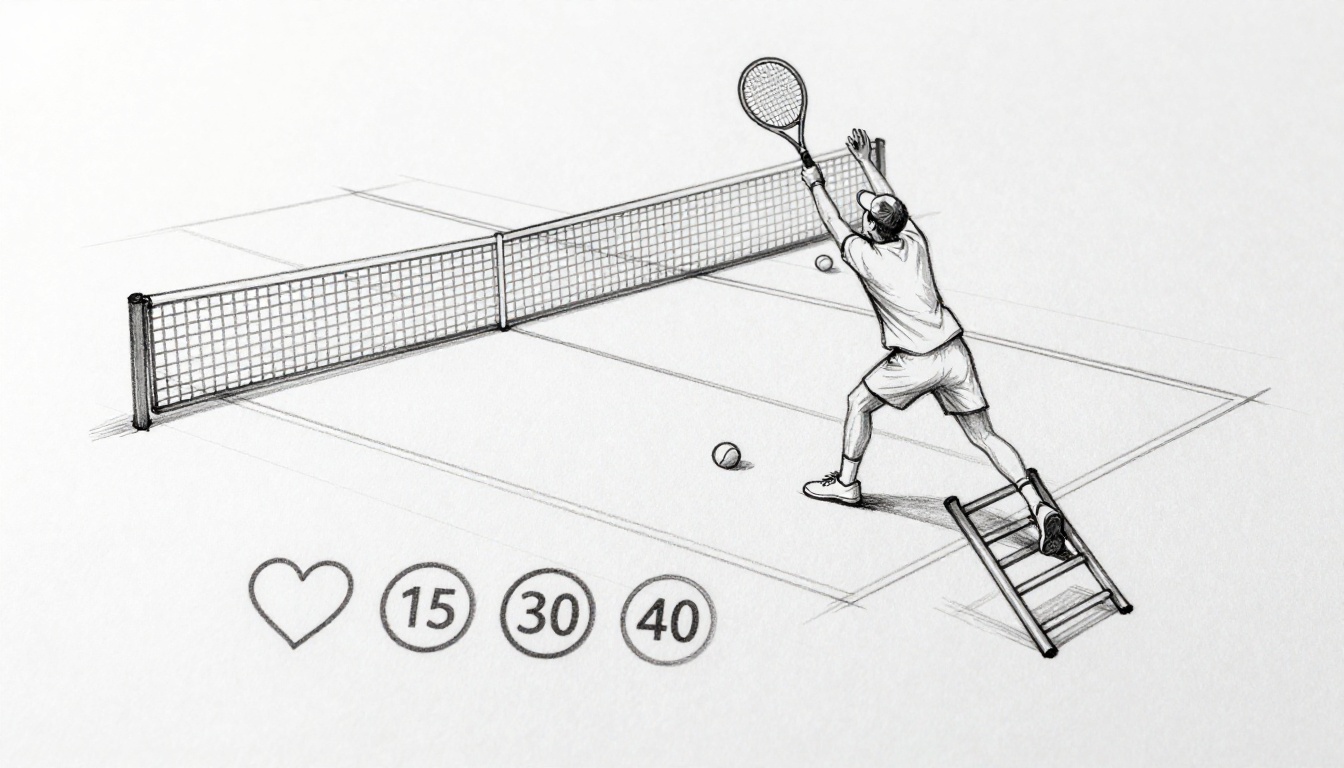
Picture this. You settle in for your first live tennis match. Djokovic blasts a serve. The announcer yells “15-love.” You blink. What does love mean? Why skip from 15 to 30? Minutes later, it’s “deuce” and “advantage.” Your head spins.
Tennis scoring looks odd at first. Yet it follows simple rules once you break it down. This guide shows how tennis scoring works step by step. You’ll grasp points, games, sets, and matches. No more confusion at the next Grand Slam.
Pros like Swiatek or Alcaraz make it thrilling. But scores trip up new fans. Think of it as a ladder: points build games, games build sets, sets decide matches. We’ll climb it together. You’ll follow any rally with ease. Ready to crack the code? Let’s start at the bottom with points.
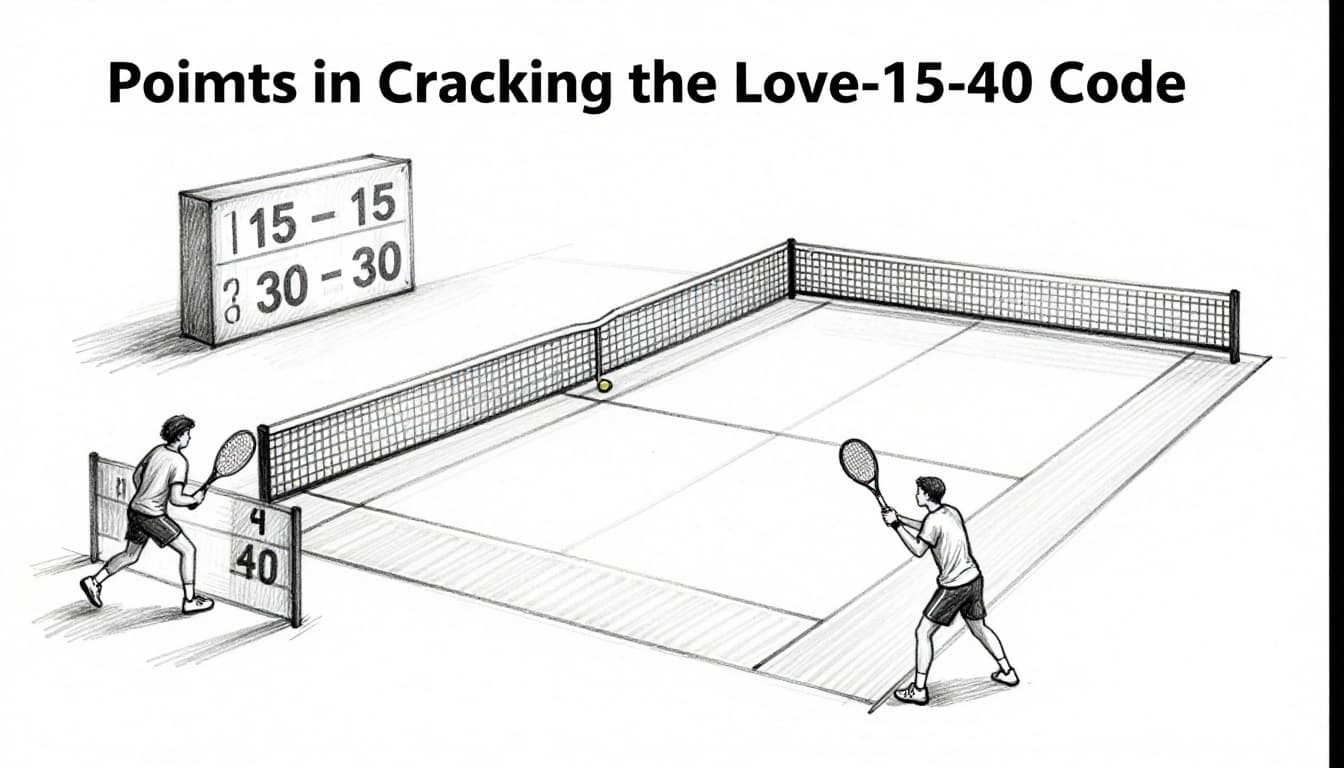
Points in a Game: Cracking the Love-15-30-40 Code
Games form the base of tennis scoring. A player wins a game by taking four points first. But they need a two-point lead. Scores use quirky terms: love means zero. Then 15, 30, 40.
The server calls their score first. Say the server wins the first point. It’s 15-love. Receiver grabs the next two. Now it’s 15-30. Server fights back to 40-30. One more point seals the game.
Why these numbers? Clocks come to mind. Picture quarter hours: 15 for one, 30 for two, 45 shortened to 40. History nods to that. But focus on play. Call scores aloud next time you hit. It sticks fast.
For official details on points, check the USTA’s tennis scoring rules. They explain it clearly.
Practice helps. Server at 0-0 starts. They win point one: 15-0. Receiver ties: 15-15, or “15-all.” Server pulls ahead: 30-15. Tension builds as numbers climb.
Sides switch every odd game. But scores stay server-first. Miss that, and confusion hits. Now imagine 40-40. That’s next.
Deuce and Advantage: What Happens When It’s Tied at 40-40
Play reaches 40-40 often in tight games. Call it deuce. Neither wins yet. They need two points ahead.
Next point goes to server: advantage server, or “ad-in.” Receiver fights back: back to deuce. Server wins again from ad-in: game over.
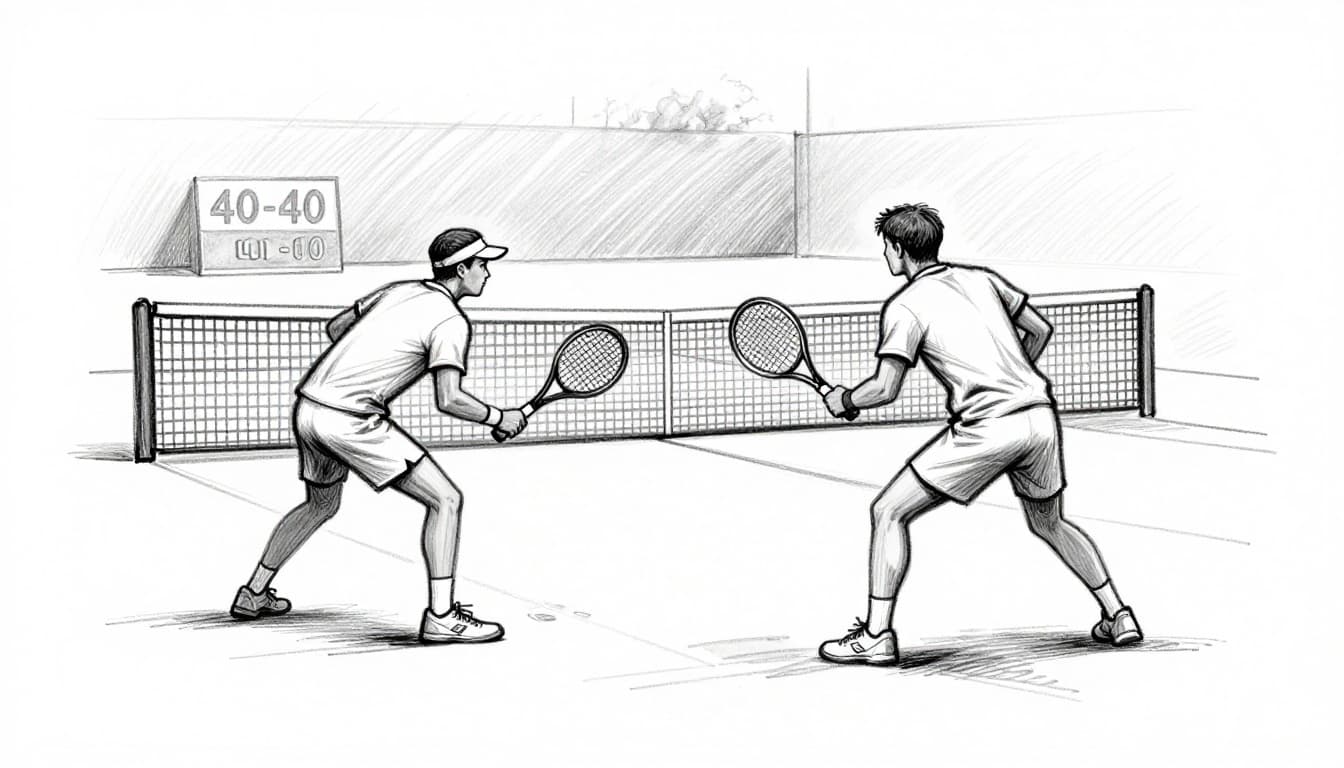
Picture a sequence. Deuce hits. Server takes point: ad-in. Receiver answers: deuce. Server grabs two straight: game. Patience rules here. Newbies think 40-40 ends it. Wrong. It restarts the battle.
This back-and-forth tests nerves. Pros stay calm. You will too after a few watches. Therefore, deuce adds drama. Games end 4-2 or via advantage. Simple, right?
From Games to Sets: How 6 Games (Usually) Wins the Prize
Sets stack games. First to six games wins a set. But lead by two. So 6-4 works. 6-5 does not. Play on.
Servers alternate each game. Player A serves game one. B serves two. They switch ends every odd game. Scoreboards list games: 3-2 means server won three, receiver two.
Take an example. A wins games 1, 3, 5, 6, 8, 10. B takes 2, 4, 7, 9. Set ends 6-4 for A. Quick math shows the lead.
What if 5-5? Push to 6-5, then maybe 7-5. Or 6-6 triggers tiebreak. Sets build momentum. One slip costs big.
The ITF rules of tennis outline set scoring precisely.
Tiebreaks: The 7-Point Thriller at 6 Games All
Tiebreak fixes 6-6 sets. Drop love-15. Use normal numbers: 1, 2, up to 7. Win by two points.
Serving shifts. First server does one point. Opponent serves two. Then alternate two each. Change ends every six points.
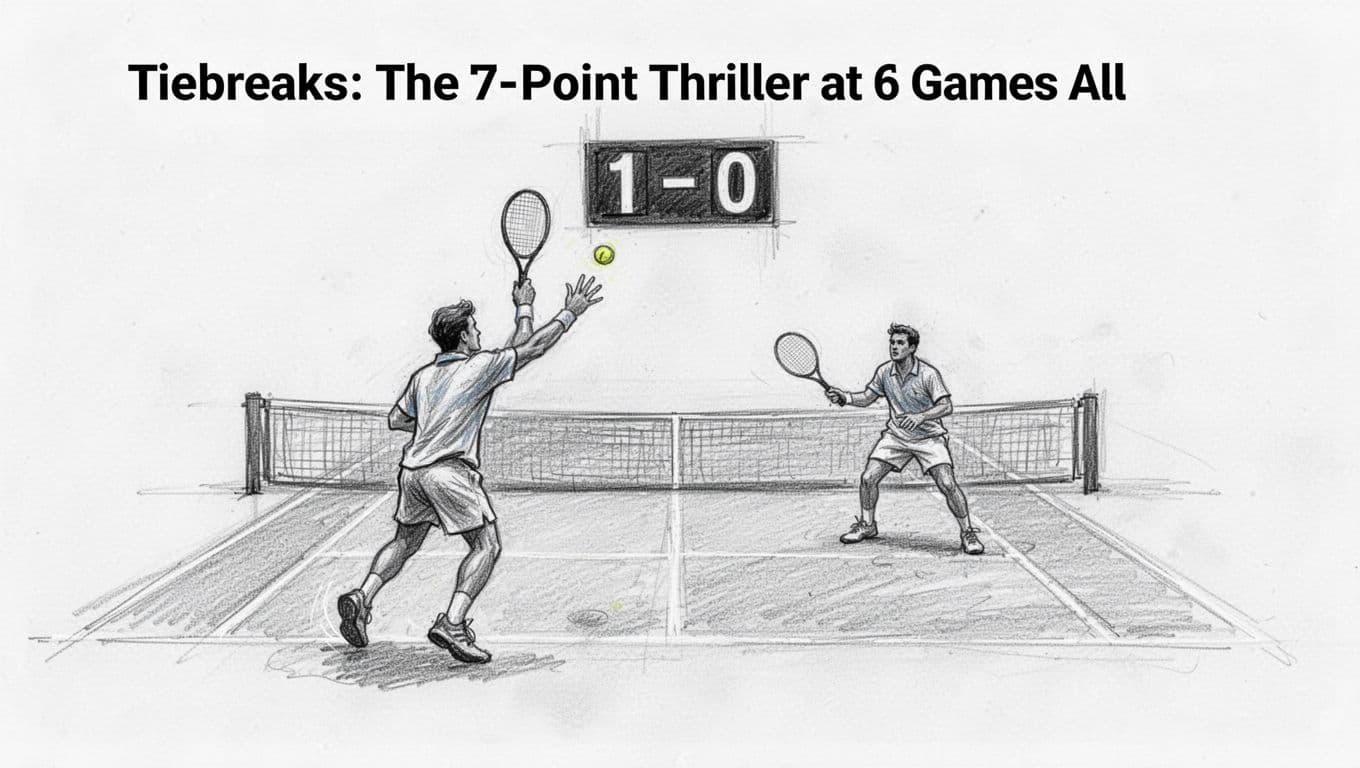
Example: 4-4 in tiebreak. Server leads 5-4. Receiver ties 5-5. First to seven by two wins. Score shows as 7-6 (3), meaning 7-6 games, tiebreak 7-3.
These moments pack crowds. Pros serve bombs. You feel the rush. Tiebreaks keep sets fair.
Matches: Best of 3 or 5 Sets to Crown the Winner
Matches combine sets. Most singles use best of three. Win two sets first. Men’s Grand Slams go best of five.
Sample win: 6-4, 5-7, 6-3. Player takes first and third sets. Straight sets mean 6-4, 6-2. No third needed.
Final sets vary. In Grand Slams, 6-6 triggers a 10-point super tiebreak. First to 10 points by two. This shortens marathons. All four majors follow it now.
Doubles often end final sets with super tiebreak too. Check scores live. Apps show sets clearly.
The Sporting News guide to tennis scoring covers match formats well.
No-Ad Scoring and Other Fun Variations
Casual play skips advantage. At deuce, next point wins. Faster fun.
Pros stick traditional. Tournaments tweak finals. Wimbledon used no tiebreak in deciding set before. Now super tiebreak rules.
| Tournament | Final Set Rule |
|---|---|
| Australian Open | 10-point tiebreak at 6-6 |
| French Open | 10-point tiebreak at 6-6 |
| Wimbledon | 10-point tiebreak at 6-6 |
| US Open | 10-point tiebreak at 6-6 |
This table shows consistency. Variations suit levels. Pick what fits your game.
Real Examples and Fixes for Scoring Head-Scratches
Let’s tie it together. Match: Set 1, Player A 6-4. A wins six games, B four. Set 2 goes 6-6. Tiebreak 7-5. Score: 7-6 (5).
Confusions pop up. “All” means tie, like 30-all. Server score first always. No 1-2-3 points because tradition.
Quick quiz. What’s 40-30? Server one point from game. 30-40? Receiver close. Ad-out favors receiver.
Watch a pro match. Note deuce loops. Follow sets climb. Suddenly, scores click. Like reading a book.
The Wikipedia tennis scoring page dives into origins if curious.
You fix head-scratches fast. Rally won? Add point. Games stack. Sets decide.
Tennis scoring ladders up: points make games, games make sets, sets make matches. Now you follow any pro clash. Grab a racket. Or tune into ATP, WTA next time. Confident yet?
Share your first scoring mix-up in comments. What puzzled you most? Hit the court. Subscribe for more guides. You know tennis scoring inside out. Game on!