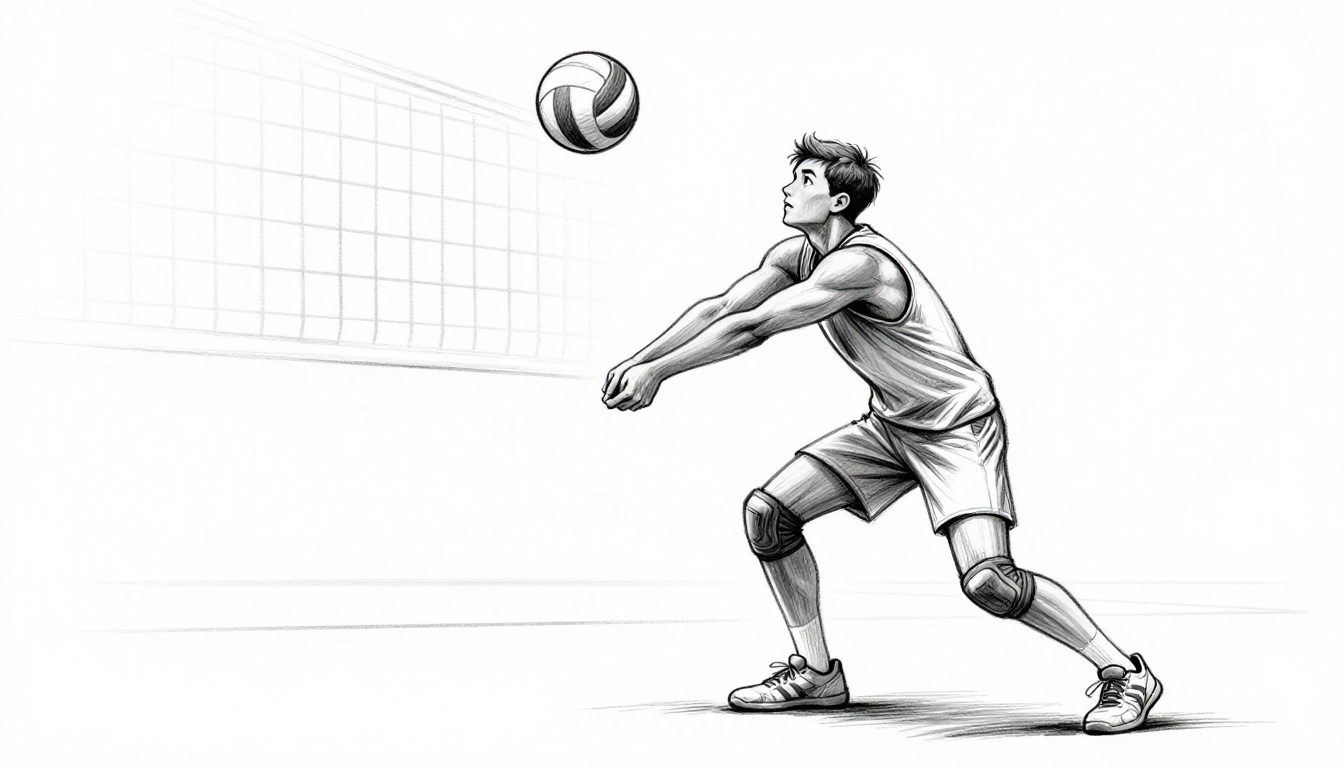
A single strong serve can score a point or rattle the other team. In college matches, aces from serves make up about 6-8% of total points, yet every rally starts with one. You want control and confidence from your first try.
The overhand float serve fits beginners best. It stays simple, builds accuracy, and sends the ball wobbling over the net. This guide shows right-handers the basics, with swaps for lefties. You’ll learn stance and grip, a full step-by-step motion, fixes for slip-ups, and quick drills. Follow along, and you’ll nail serves that boost your game.
Set Up for Success with the Right Stance and Grip
Good form starts before you swing. Feet shoulder-width apart give balance. For right-handers, point your left foot at the net; lefties reverse it. Weight sits on your back foot. Bend your knees a bit. Shoulders stay square to the net.
This setup lets you push off for power. It also keeps you steady. Eyes lock on your target across the court. Practice this stance in a mirror. Hold it for 10 seconds. Feel the balance.
Non-hitting hand holds the ball. Palm up at chest height. Fingers spread light. Hitting arm pulls back. Elbow sits high near your ear. Hand stays loose, like drawing a bow and arrow.
Why does this matter? A high elbow adds speed. The palm-up hold sets a clean toss. Practice the pose 10 times. Muscle memory kicks in fast.
Here’s a quick checklist to nail your setup:
| Key Check | Right-Hander Position | Left-Hander Swap |
|---|---|---|
| Feet | Shoulder-width, left forward | Shoulder-width, right forward |
| Knees | Slightly bent | Slightly bent |
| Weight | On back foot | On back foot |
| Shoulders | Square to net | Square to net |
| Elbow | High near ear | High near ear |
Run through this table before each serve. It spots issues quick. As a result, your serves fly true.
Step-by-Step Guide to Your First Overhand Float Serve
Master the motion in parts. Right-handers toss with the left hand; lefties use the right. Start slow. Build speed later.
First, the toss. Push the ball straight up with your non-hitting hand. Aim for arm’s length in front of your hitting shoulder. Picture a triangle spot there. Practice 10 toss-and-drops. No swing yet.
Next, step forward. Your front foot moves as the ball rises. Then rotate. Hips lead, shoulders follow. Swing your hitting arm fast and straight. Punch with the heel of your hand through the ball’s center. Keep contact at eye height. Snap your wrist. Follow through, point at the target.
Freeze after. Check your pose. Body faces the spot. Balance holds.
Use this key checks table mid-practice:
| Step | Good Form | Quick Fix |
|---|---|---|
| Toss | Straight up, shoulder height | Use fingers only, arm straight |
| Step | Front foot forward | Time with ball rise |
| Contact | Center of ball, heel of palm | Eye height, wrist snap |
| Finish | Point at target, balanced | Freeze and adjust |
Consistent toss creates that float. The ball dips and dances. For more on float basics, check University of Georgia’s serving guide.
Nail the Toss So It Lands Right Where You Want
Tosses go wrong most. The ball curves left or drops low. So toss higher. Use just your fingers. Keep the arm straight.
Mark a spot on the floor with tape. Drop 10 balls in a row to it. No swing. This builds control. Bad tosses kill the serve. Master it alone first.
Practice makes tosses hit the triangle every time. Then add the swing.
Player perfecting the toss position.
Swing Your Arm with Power and Snap Your Wrist
Step with your front foot. Hips turn first. Shoulders coil after. Elbow stays high. It leads the swing.
Punch straight through. Heel of the palm hits first. Snap the wrist down at contact. This adds the float spin. Or no spin, really. The ball sails unpredictable.
Follow through full. Arm points at the target. Power comes from the body turn.
Hit the Ball Clean and Finish Strong
Meet the ball at its peak. Eye level or ponytail height works. Middle of the ball meets middle of your hand.
Body squares to the target. No twist. Freeze in balance after the hit. This stops wild shots. Accuracy grows here.
Dodge These Common Beginner Serving Mistakes
New players mess up tosses first. The ball veers off. Or elbows drop low. Power fades. No step means flat serves. Contact slips side. Balls sail long.
Fix them quick. Video your form. Watch from side view. Self-check beats guesswork. For extra tips on errors, see Javelin Sports’ fixes for serving mistakes.
Wonky toss: Too low or sideways. Practice tape-spot drops 10 times. Toss straighter.
Low elbow: Arm sags. Power drops. Start in bow pose. Swing like a high-five.
No shift: Stay planted. Serves lack zip. Step forward always.
Bad contact: Off-center hits spin wrong. Punch the middle.
Twist: Body turns away. Aim stays off. Square up first.
Spot these. Fix on the next try.
Fix a Wonky Toss That Throws Off Your Whole Serve
Curves happen from wrist flicks. Drops come from low pushes. Solution? Toss higher. Straighter. Fingers only.
Tape a floor spot. Drop 10 without curving. Then add toss height. Serves improve right away.
Stop Swinging from a Low Elbow and Lose Power
Elbow dips mid-swing. Ball floats weak. Hold it ear-high. Swing straight. Like slapping a high ball.
Build the habit. 10 poses, then swing dry. Power returns.
Build Serving Skills with Fun, Easy Practice Drills
Spend 15 minutes daily. Start with toss-drops. 10 reps. Then wall serves. Stand 3-5 feet away. Feel the contact snap back.
Tape target zones. Short, deep, corners. Use cones too. Hit 10 per spot. Partner up. Rally back and forth from close range.
Mental checklist: toss, step, contact, follow, spot. Video weekly. Track streaks. In 2026, coaches stress consistency over bombs. Apps track if you want.
Progress safe. Step back as hits land. Home or court works.
See Coaching VB’s overhand tips for beginners for more drill ideas.
Solo Drills You Can Do Anywhere, Even at Home
No gear? Toss and drop to tape. Wall serves give instant ping. Toss, set, trap against it.
These build basics fast. No partner needed. Do 20 reps.
Target Practice to Hit Any Spot on the Court
Mark zones with tape. Short line, deep back, corners. Serve 10 each.
Count aces. Step back one foot per good set. Mix spots confuse passers.
Nail solid stance, toss, and contact. Practice daily. The overhand float gives beginners control and that wobble fun.
Grab a ball now. Run the drills. Video your form. Jump into pickup games soon.
What’s your first ace story? Share in comments. Your serve shines next.
(Word count: 1487)