Imagine the roar of a crowd as a player slots home a last-minute goal in the World Cup final. You cheer, but then the ref waves it off for offside, and you’re lost. New fans often feel that frustration because soccer rules seem tricky at first.
This guide fixes that. You’ll learn the basics step by step, from the field layout to fouls and scoring. We cover the official FIFA Laws of the Game through March 2026, including 2025 tweaks like goalie time limits. Soon, you’ll follow any match with confidence.
Let’s start with the field where all the action happens.
Picture the Soccer Field: Sizes, Lines, and Gear Basics
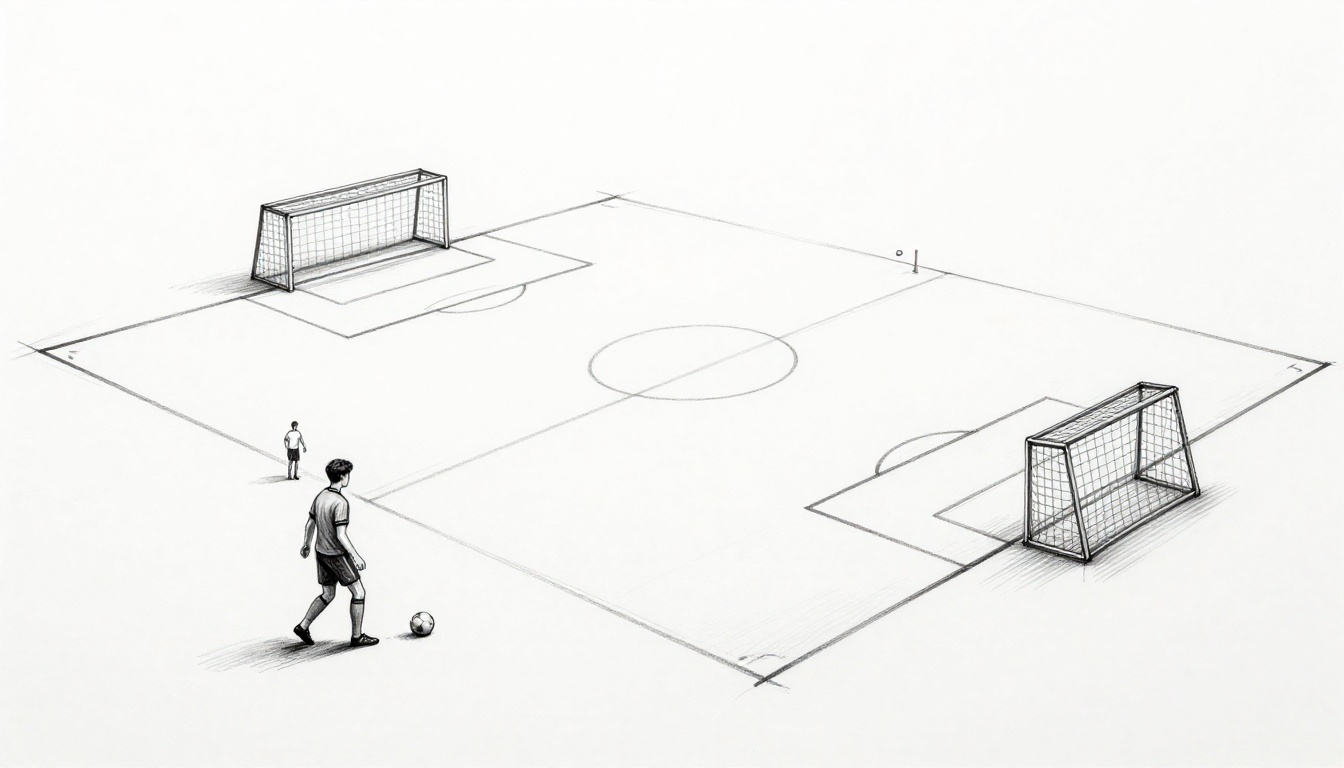
Soccer fields, or pitches, come in standard sizes to keep games fair. For international matches, the pitch measures up to 120 meters long and 90 meters wide. Minimum sizes run 100 meters by 64 meters. These limits help pros play on familiar ground.
Think of it like a big rectangle, longer than wide. The halfway line splits it down the middle. A center circle with a 9.15-meter radius sits there for kick-offs. Goals stretch 7.32 meters wide and 2.44 meters high at each end.
Key areas protect the goalie and set up penalties. The penalty area extends 16.5 meters deep and 40.3 meters wide from the goal line. Inside it, the goalie can use hands. The smaller goal area measures 5.5 meters deep by 18.3 meters wide. The penalty spot sits 11 meters out.
Corner arcs with a 1-meter radius mark the corners. These spots matter because they dictate restarts after the ball goes out. No major changes hit these markings in 2026. For exact diagrams, check Wikipedia’s football pitch page.
The ball must be spherical, 68 to 70 centimeters around, and weigh 410 to 450 grams. Pressure stays between 0.6 and 1.1 atmospheres. Goals count when the whole ball crosses the line between the posts and under the crossbar.
Pitch Markings That Guide Every Move
Markings control restarts and privileges. In the penalty area, attackers can’t use hands, but the goalie can. Goal kicks start from the goal area if opponents last touched the ball over the goal line without scoring.
Corners come from the arc nearest where the ball left play. Defenders last touch it over their goal line, no goal. The penalty box’s larger size gives the goalie room to handle crosses. These lines prevent chaos and speed up play.
Fun fact: the goal area lets goalies punt or drop-kick safely. Next time you watch, spot how refs use these for quick decisions.
The Ball and Goals: Simple Specs for Fair Play
Balls stay uniform for safety and bounce. Teams inspect them before kick-off. Goals need a net or crossed line fully between posts.
Attackers never touch with hands or arms, except the goalie in their own penalty area. A handball there cancels a goal. These rules ensure foot skills shine.
Build Your Squad: Players, Positions, and Match Timers
Teams field up to 11 players, including one goalie. You need at least seven if players get sent off. Most leagues allow five substitutes, but senior internationals permit eight in friendlies.
Positions stay fluid. The goalie stops shots with hands in the box only. Defenders block attacks near their goal. Midfielders connect defense to attack. Forwards chase goals up top.
Players switch roles often, so no one stays stuck. Substitutions happen during stops, and teams play shorthanded if needed.
Matches run two 45-minute halves with a 15-minute halftime. Refs add time for injuries or subs. No full stop-clock like basketball; play flows continuous.
Ties in knockouts lead to two 15-minute extra time halves. Penalties follow if still even.
Player Numbers and Key Roles Explained
The goalie stands out because hands work inside the penalty area. Outfield players use feet, head, or chest only. Teams drop below seven, and the match ends.
Roles blend in modern soccer. A defender might surge forward. This flexibility keeps games exciting.
Clock Management: Halves, Halftime, and Extra Time
Refs track added time at each half’s end. Delays like fouls or celebrations eat seconds. Halftime lets teams regroup.
Extra time mirrors halves but shorter. Fatigue tests fitness here. These timers balance endurance and fairness.
Back in Action: Kick-Offs, Throw-Ins, and Restarts
Restarts get play moving fast. After a goal or halftime, kick-off starts from the center spot. The kicker rolls the ball forward while others stay behind the halfway line. Opponents wait 9.15 meters away.
The ball must move before anyone else touches it. Teams switch ends each half.
Throw-ins happen when the ball crosses the sideline, last touched by opponents. Both feet stay on the ground, arms overhead. Deliver it from behind the line, two meters from rivals.
Goal kicks begin in the goal area if attackers last touched it over the goal line, no score. The ball can now go direct into the penalty area, per recent rules. Corn ers arc from the nearest corner if defenders last touched over their line.
Dropped balls go to the team in possession or the goalie in the box. 2025/26 trials clarify these for less arguing. See IFAB’s Laws documents for full details.
Nail the Kick-Off Every Time
All players except the kicker stay behind the ball and halfway line. Opponents match that distance. A bad kick gives it back.
Practice this, and you’ll see pros nail it under pressure.
Throw-Ins, Goal Kicks, and Corners Step-by-Step
Throw two-handed overhead, feet grounded. Spin adds distance.
Goal kicks clear danger; opponents stay out until it exits the penalty area. Corners attack the near post often. Refs now use five-second counts to speed these up.
Net the Goal: Scoring Rules and Offside Simplified
A goal scores when the entire ball crosses the goal line between posts and under the bar. No hands or arms from attackers count, except goalie saves in their box. Own goals hurt your team.
Offside flags players lurking too far forward. It happens when you’re ahead of the ball and second-last opponent as a teammate plays it. Your head, body, or feet must be past their hands/arms level.
You’re safe in your own half, level with the second-last foe, or from goal kicks, throws, or corners. Interfering with play, opponents, or gaining advantage triggers it. Indirect free kick to defenders follows.
2025 tweaks judge goalie throws from last contact point. For a clear breakdown, read Sports Illustrated’s offside explainer.
What Makes a Goal Official?
Watch the whole ball cross. VAR checks tight calls now. Handballs void buzzy celebrations.
Crack the Offside Rule Without Headache
Picture defenders as a line; don’t cross it before the pass. Passive offside stays okay unless you meddle. Timing beats position every time.
Keep It Clean: Fouls, Kicks, Penalties, and Card Warnings
Fouls include kicking, tripping, pushing, holding, charging, deliberate handball, or unnatural arm positions. Goalies hold over eight seconds now? Corner to foes, with ref’s five-to-eight second signal. Dangerous plays like high kicks draw whistles.
Misconduct covers dissent, violence, or delaying. Direct free kicks let scorers shoot straight. Indirect needs another touch first.
Penalties award one-on-one shots for direct fouls inside the box. Opponents form a wall nine meters back for free kicks.
Yellow cards warn for reckless play; two mean red and ejection. Reds send players off instantly. Captains alone approach refs now, or others yellow. Bench accidentally touches? Indirect free kick, no card.
Download The FA’s 2025/26 Laws PDF for trials.
Spot Common Fouls and Misconduct Fast
Tripping topples runners. Handball blocks paths. Goalie stalls waste time, now punished quicker.
Dissent heats refs; captains handle it.
Free Kicks, Penalties, and Cards Demystified
Quick free kicks skip walls. Penalties spot-kick under pressure. Yellows flash; reds point off.
These keep soccer fair and fierce.
Mastering the field, players, restarts, goals, offside, and fouls unlocks soccer’s flow. 2025/26 updates like goalie limits and captain zones cut waste.
Grab a ball, watch your next game, or play with friends. Rules click fast now.
What’s the first rule that surprised you? Share below or ask questions. You’ve got the basics; enjoy the beautiful game.